A Forest,
Its Wildlife,
and the Travellers Who Found It
 Tom Cooper
This book moves in two parts. The first tells the story of a working timber forest that became, almost by accident, one of the world's finest places to watch wild mammals after dark. The second is a slower walk through the animals themselves — the mammals, birds and other wildlife that visitors most hope to meet on Deramakot's roads.
None of it replaces a guide. Deramakot is found by ear and by patient spotlighting as much as by knowing where to look, and the people who work its roads carry knowledge no book can hold. What follows is simply an introduction — enough to recognise what you're looking at, and why it matters that it's still there.
 Tom Cooper
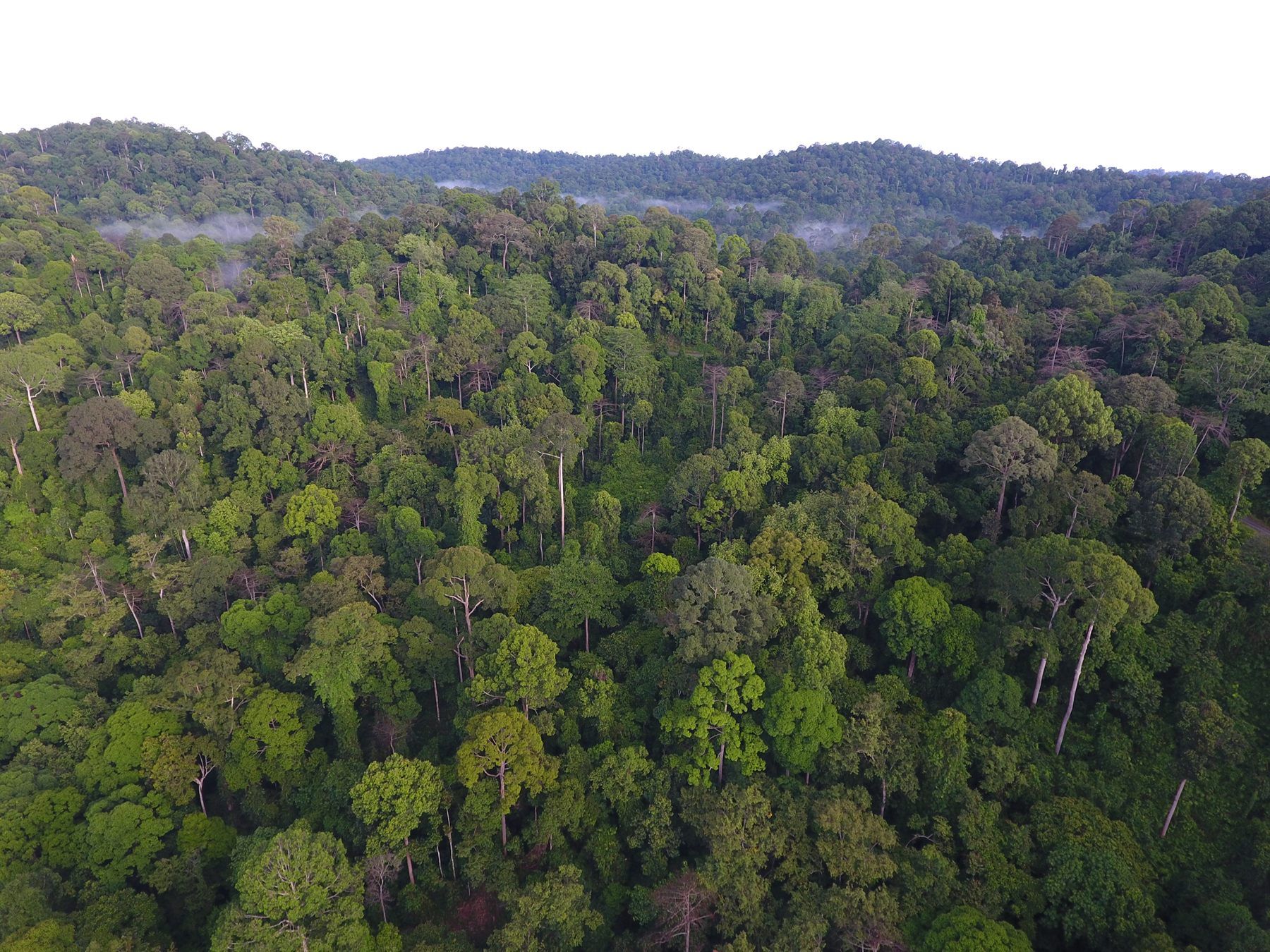
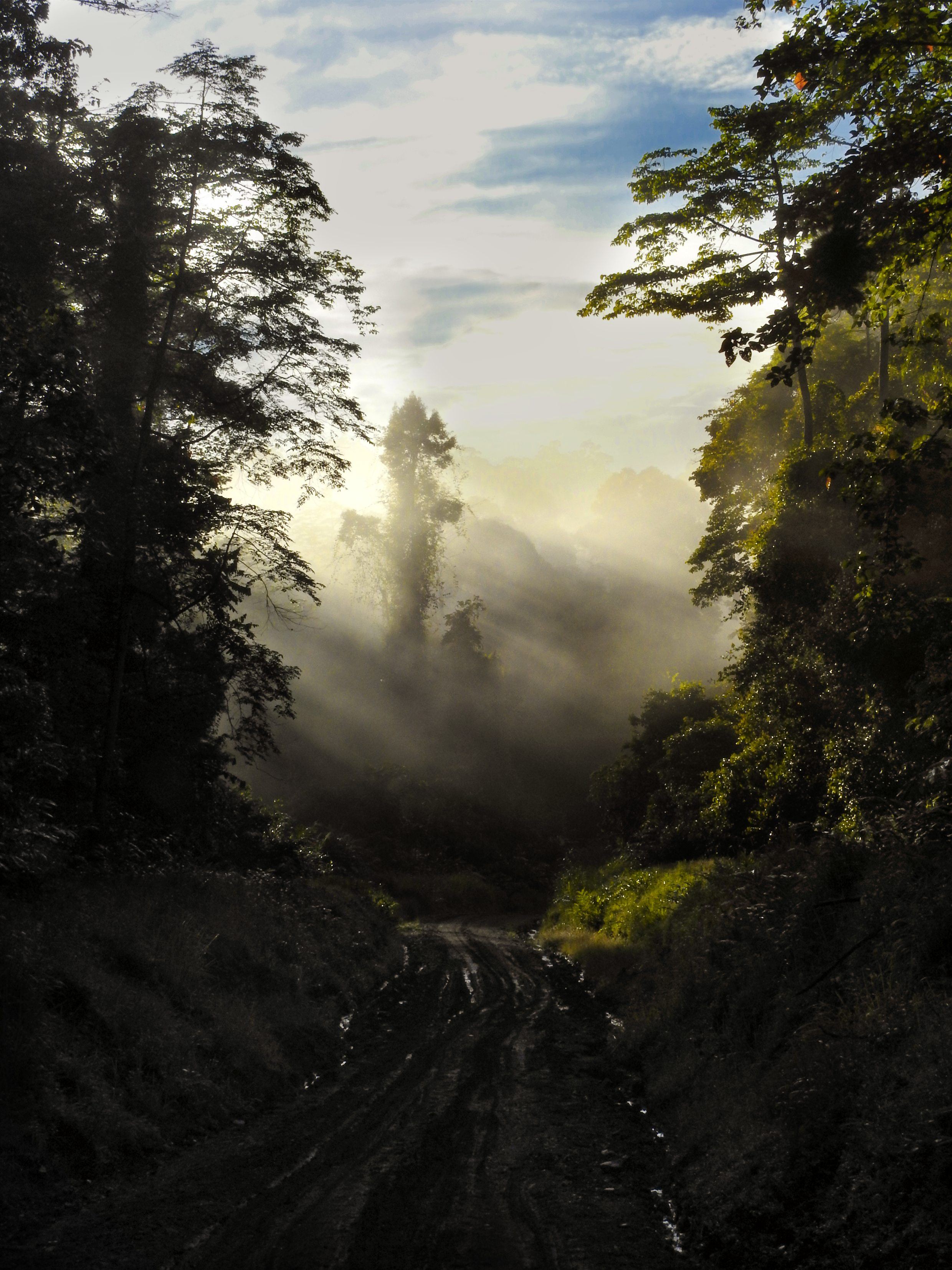
In 1989, long before "sustainable forestry" was a phrase tourists cared about, the Sabah Forestry Department made a decision that would, decades later, reshape wildlife tourism in Borneo. Working with technical support from the German Agency for Technical Cooperation, the department began developing a management system for Deramakot Forest Reserve built around a simple but, at the time, unusual premise: that a working timber forest could be logged commercially and still function as a healthy ecosystem.
The approach became known as Reduced Impact Logging, or RIL — a method of harvesting timber designed to keep damage to the surrounding forest to a minimum. Only carefully selected trees above a minimum diameter are felled. Fruiting trees, a critical food source for the reserve's mammals and birds, are left standing. Buffer zones are maintained along rivers, watersheds and steep slopes.
Deramakot became the Sabah Forestry Department's flagship — a working demonstration of what steady political support and disciplined management can achieve.
This was not an easy or obvious choice for a state forestry department to make in 1989. It meant slower harvests and a longer road to profitability than conventional logging offered. But it set Deramakot on a trajectory that, a generation later, would make it famous for reasons nobody at the time anticipated.
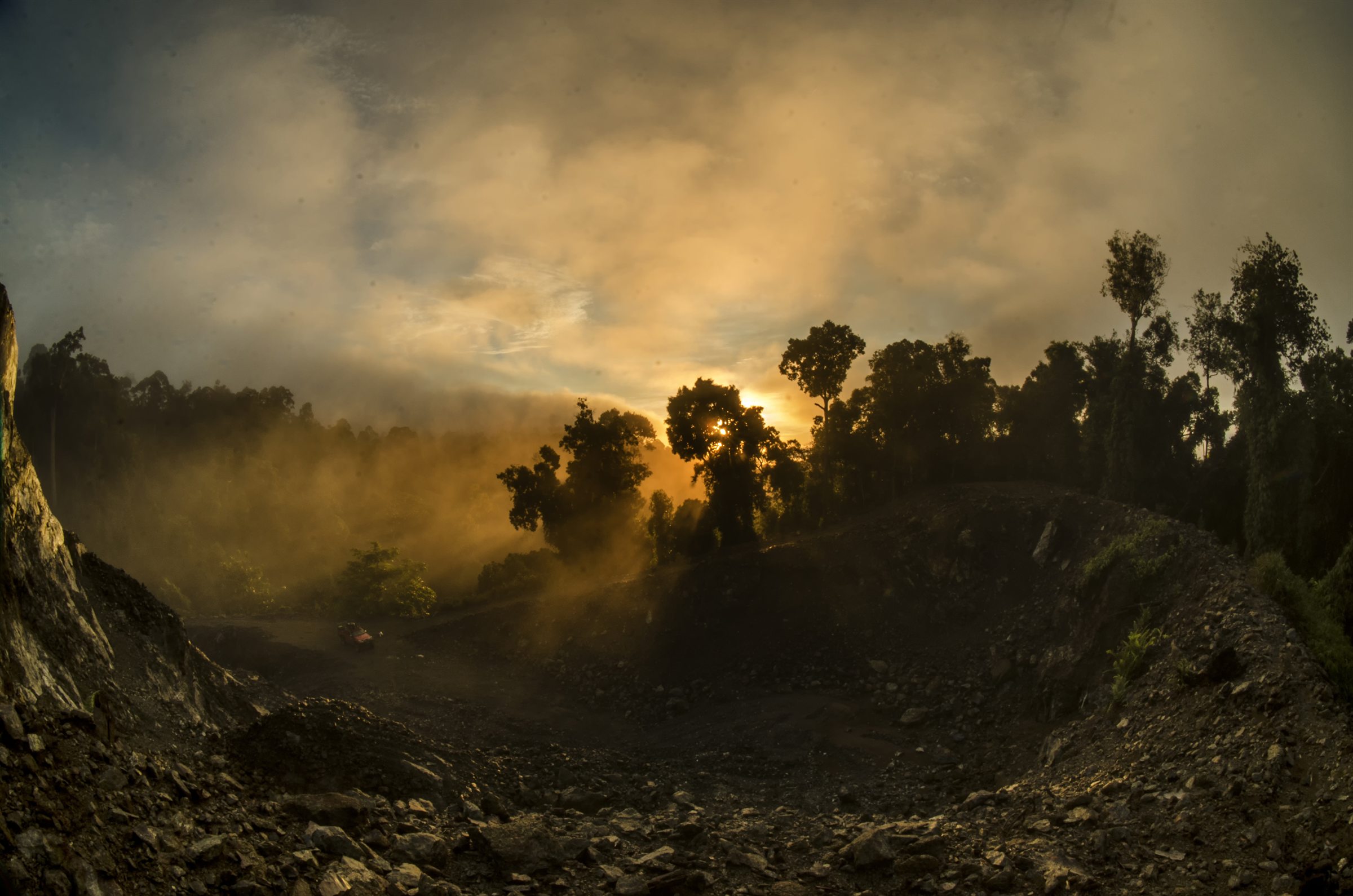
In 1997, Deramakot became the first natural forest in Southeast Asia to be certified as a "well-managed forest" by the Forest Stewardship Council. No tropical rainforest has held the certification for longer. It lapsed in late 2019 and was regained in 2024.
What followed was not something the department had explicitly set out to achieve, but it followed logically from the method. Researchers working in Deramakot began documenting healthy populations of animals that are usually the first to vanish from logged landscapes — Clouded Leopards, Sun Bears, Orangutans, and a striking diversity of civets — persisting inside an active, licensed timber concession.
Across much of Southeast Asia, "logged forest" and "wildlife-rich forest" were treated as opposites. Deramakot offered quiet evidence that with sufficiently careful management, they did not have to be.
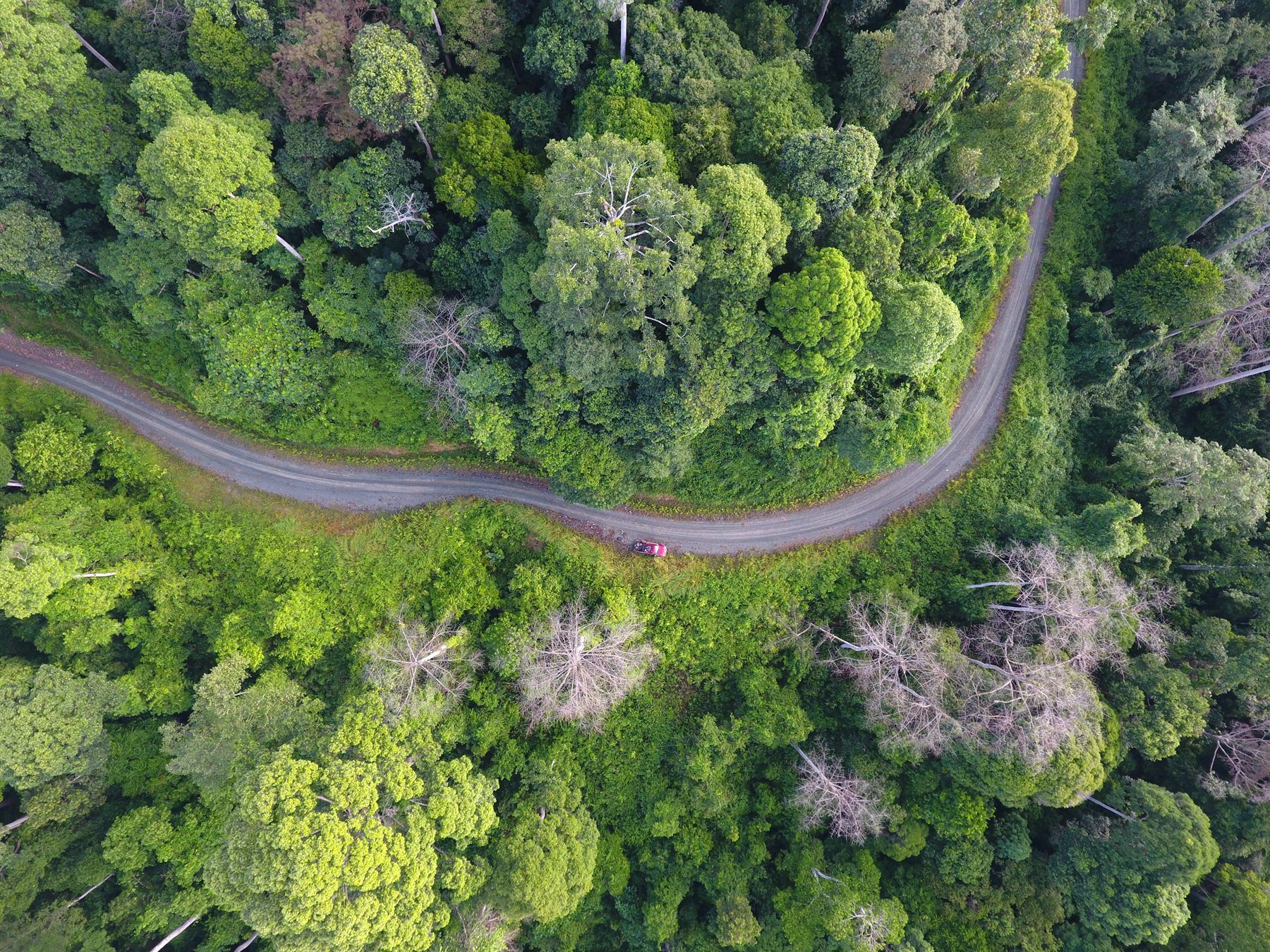 Tom Cooper
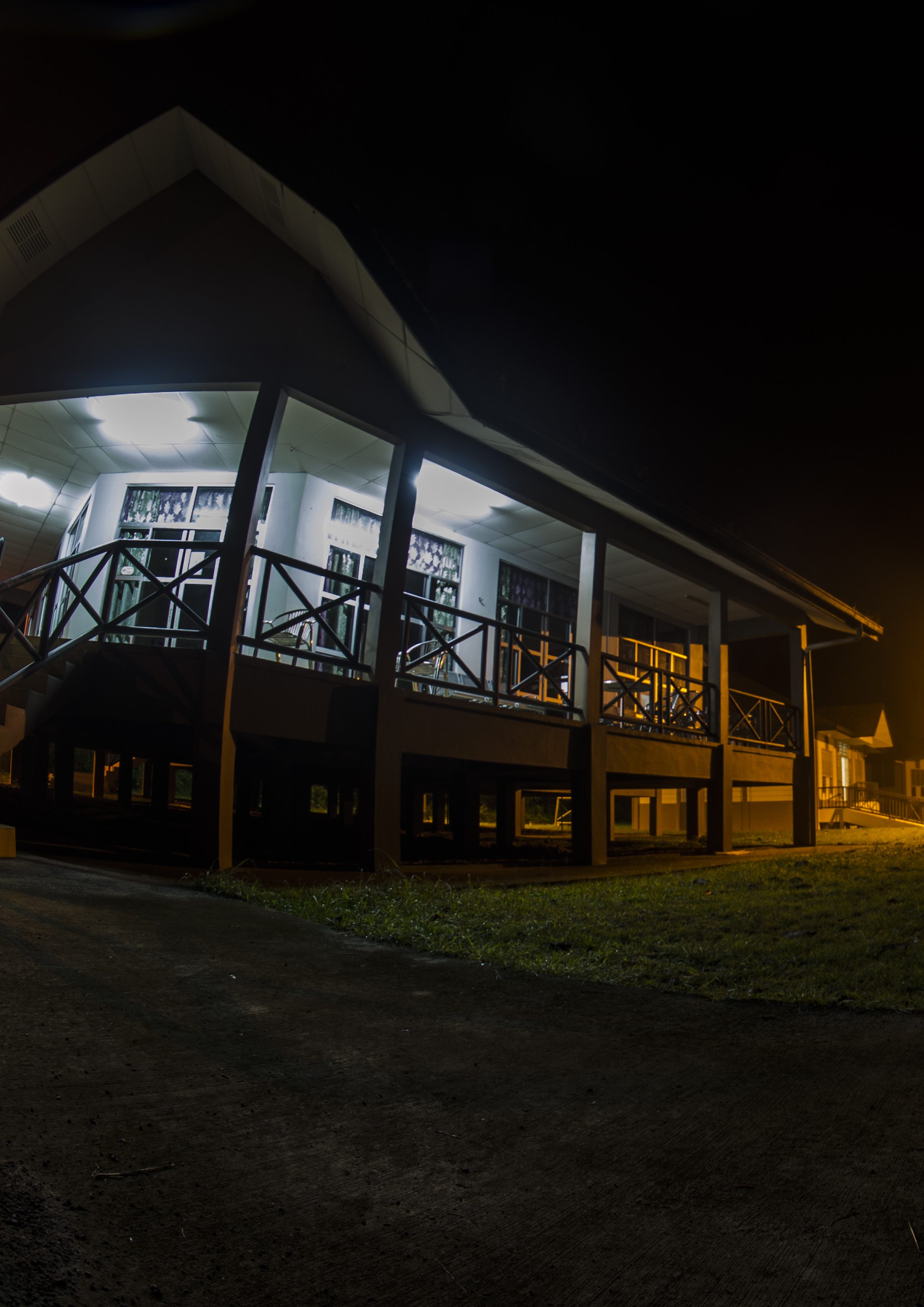
By around 2014, the Sabah Forestry Department began permitting a small number of licensed operators to bring visitors into Deramakot, using the department's own staff accommodation at the base camp as a starting point. It was a modest, cautious opening — nothing like the purpose-built ecotourism infrastructure found in Sabah's national parks.
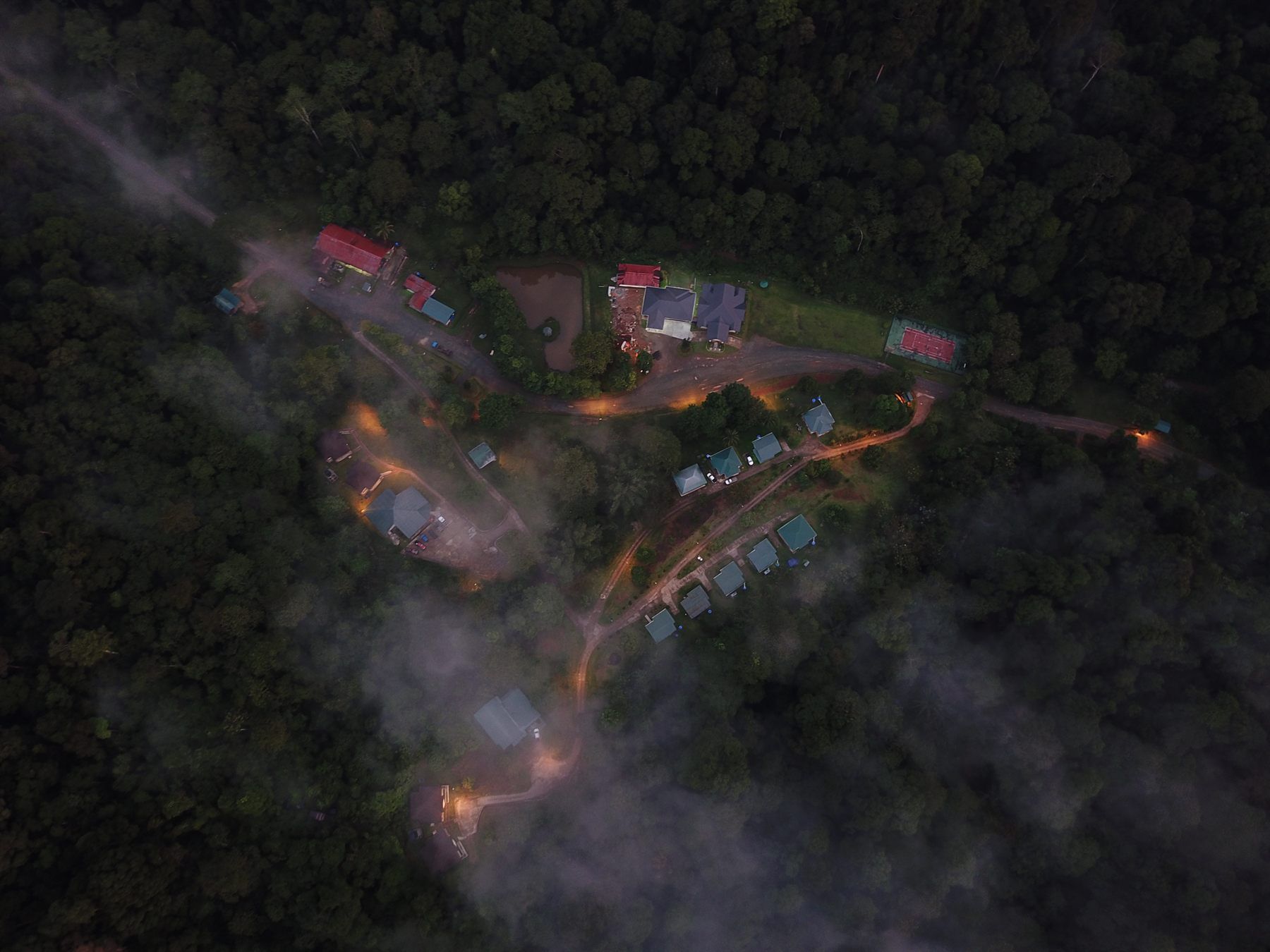
There were no manicured trails, no visitor centre. Guests stayed in the same staff housing used by forestry personnel and joined slow, deliberate night drives along the reserve's forestry roads — a network of wide, well-kept gravel tracks left behind by decades of careful timber work.
That simplicity turned out to be an asset rather than a limitation. The roads were quiet, wide enough for good sightlines, and ran straight through forest the animals actually use.
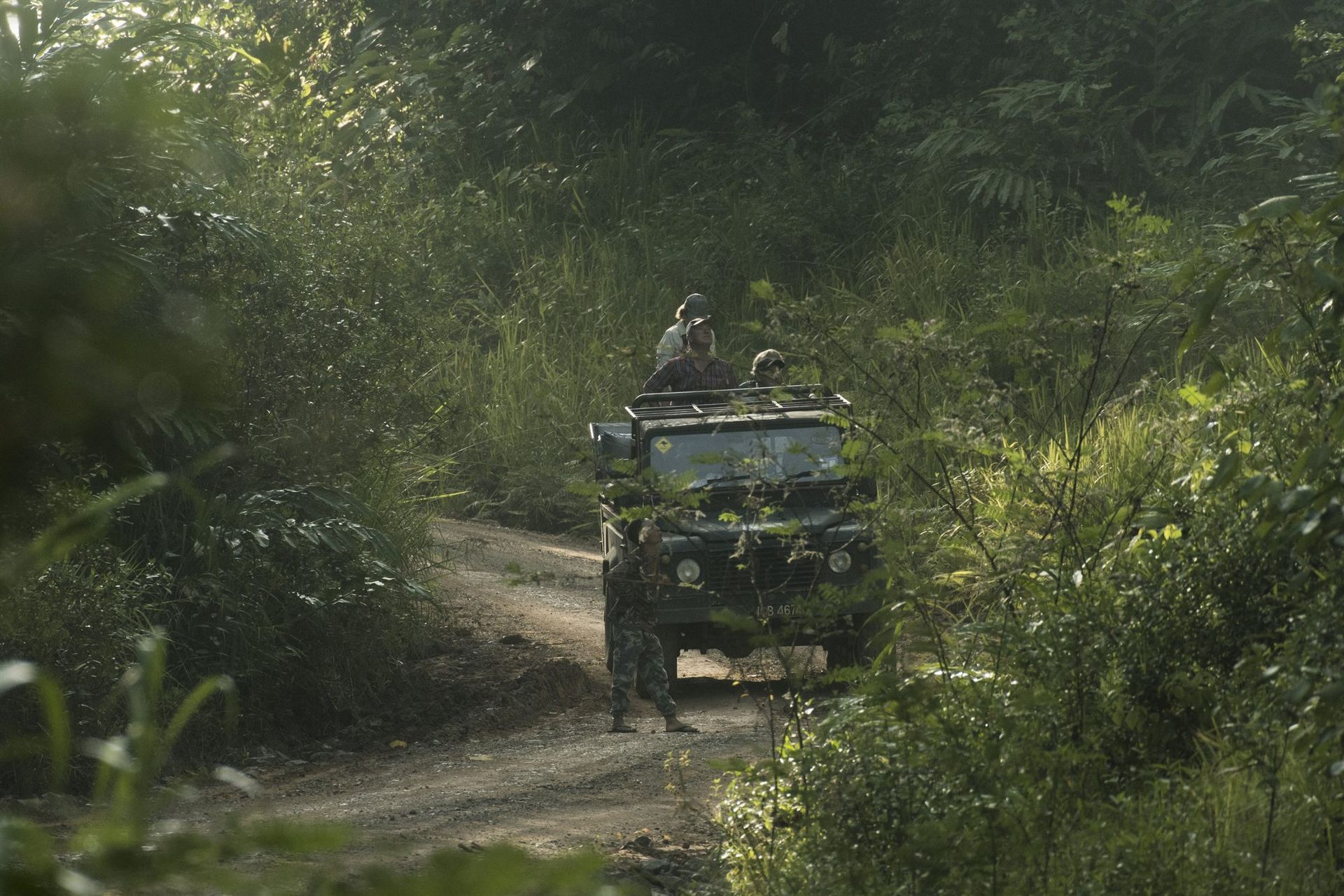
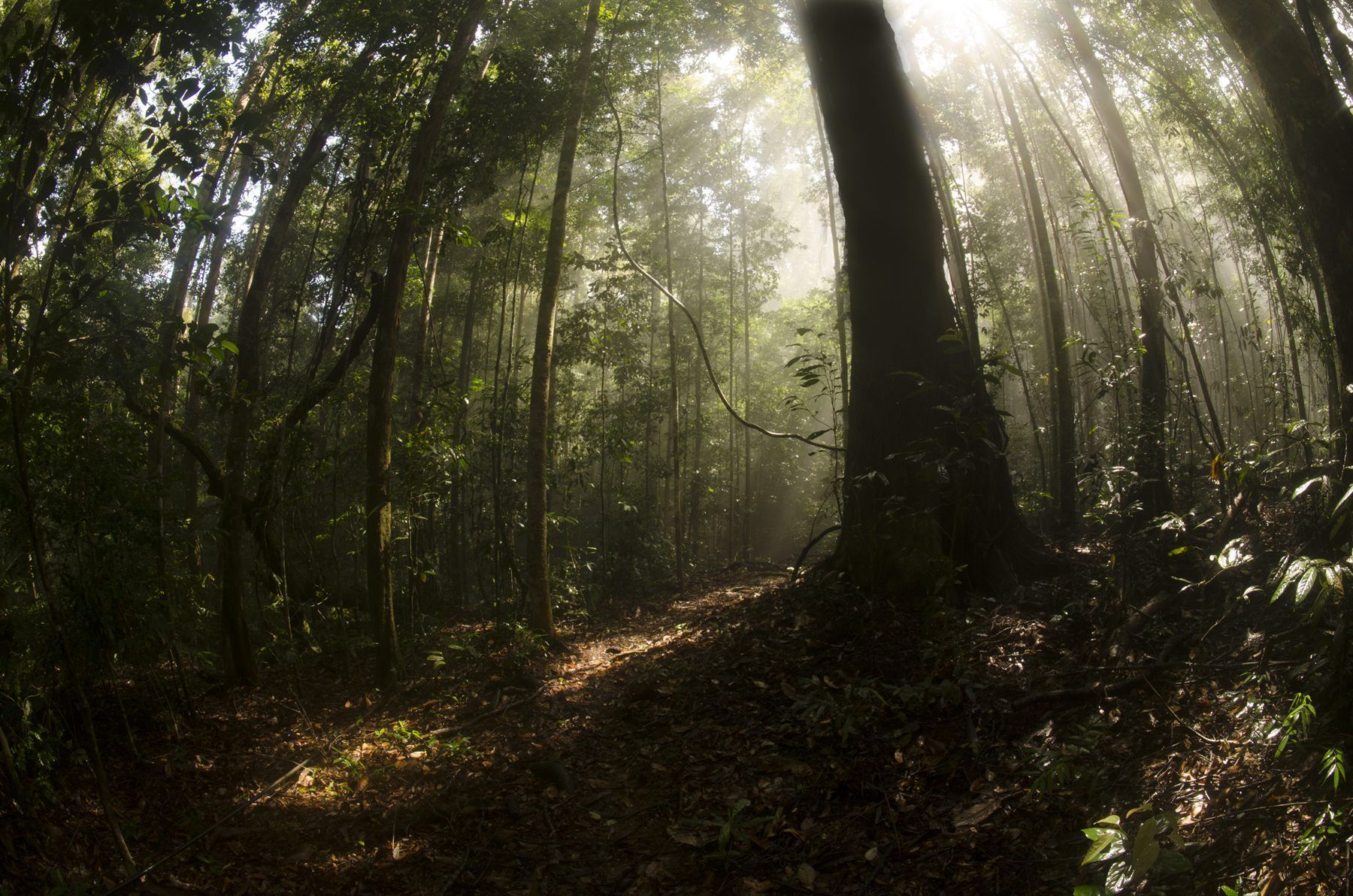
By late 2014, reports of Deramakot had begun circulating within a small, tightly networked international community: mammalwatchers, whose travel is built specifically around finding wild mammals. Early accounts described Sun Bears, Banded Palm Civets and Marbled Cats turning up within days.
In May 2015, Jon Hall arrived — founder of mammalwatching.com and widely regarded as the community's most prolific chronicler. He travelled with fellow enthusiasts Tomer Ben-Yehuda and Jean-Michel Bompar, guided through the operator Adventure Alternative Borneo.
Over four nights in May 2015, the group recorded thirty-one mammal species — Binturong and Banded Palm Civet among them.
In a community that relies heavily on shared trip reports to decide where to travel next, that account functioned as an introduction. Deramakot's status as one of the world's premier mammal-watching destinations traces directly back to that period.
Mammalwatching.com has since become the place where Deramakot trip reports are shared, and each new report has added to the reserve's reputation among the people most likely to make the journey.
 1Stop Borneo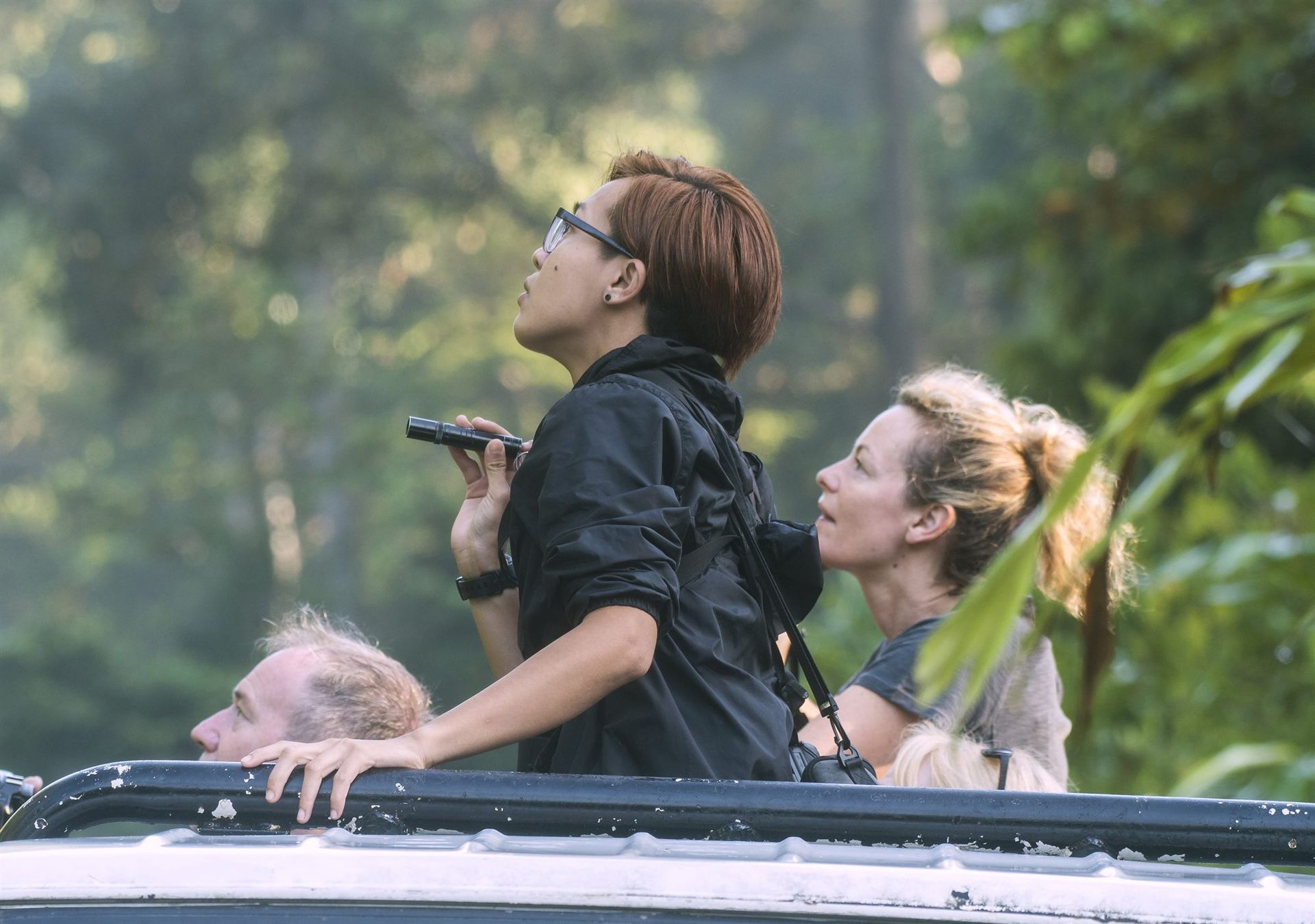
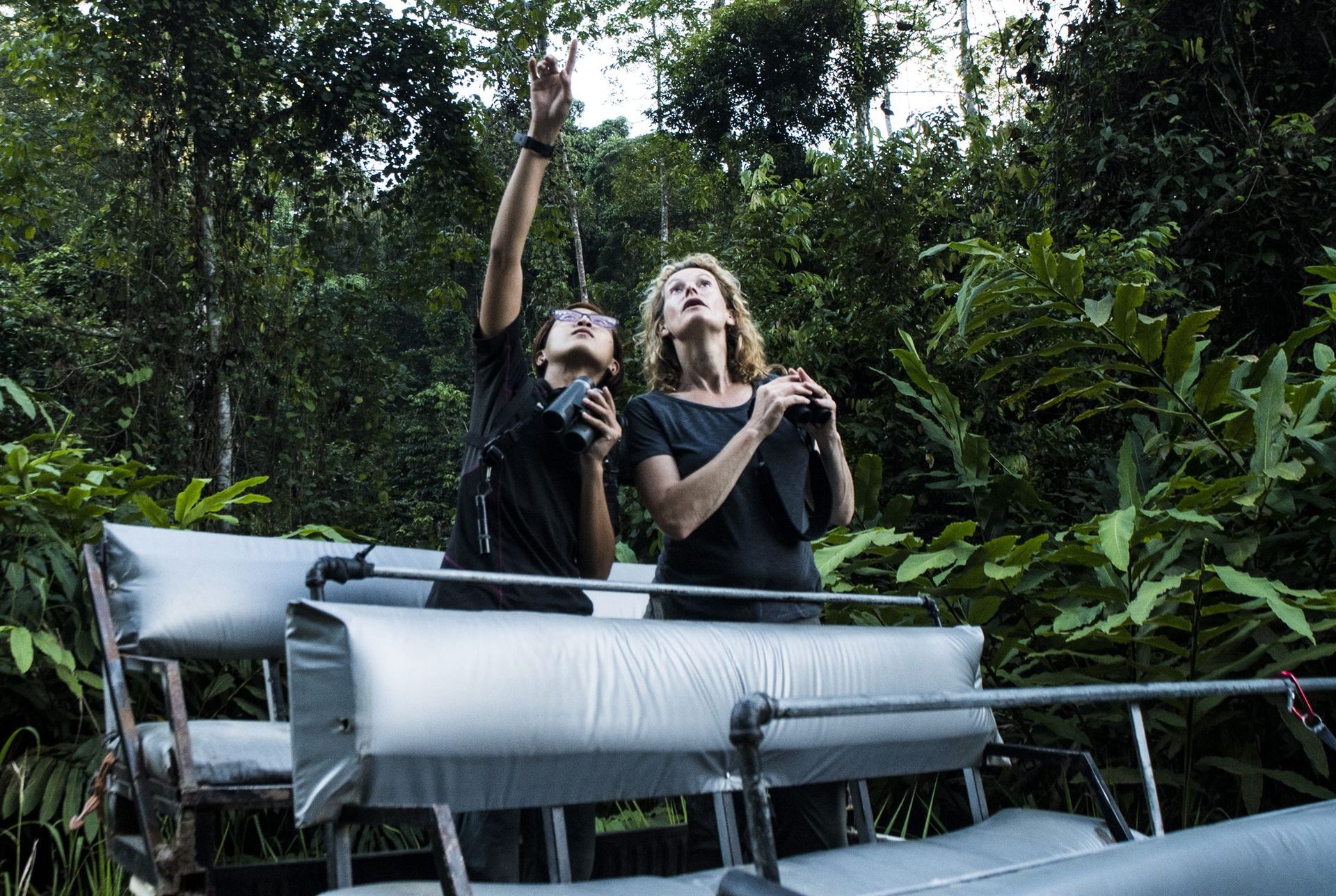
The BBC presenter and naturalist Kate Humble arrived at Deramakot in January 2019 with a more pointed question than most visitors bring: could a forest that still earned its keep as a working timber concession really hold onto the wildlife everyone assumed logging destroyed, or was that just a good story? She spent five days driving the reserve's forest roads to find out.
The animals obliged steadily rather than spectacularly — Slow Lorises, flying squirrels, Leopard Cats, Sun Bears and Bornean Pygmy Elephants, with palm civets and Banded Civets turning up so often she came to think of them as regulars. An Otter Civet, rarer by her own reckoning than the cat everyone comes for, was the trip's real prize.
The Sunda Clouded Leopard eluded her, as it eludes many visitors.
The Clouded Leopard itself never appeared. Humble left anyway believing she had her answer: that a forest can pay its way in timber without being stripped of the wildlife that makes it worth protecting in the first place — a conclusion delivered, fittingly, to the sound of gibbons singing at dawn.
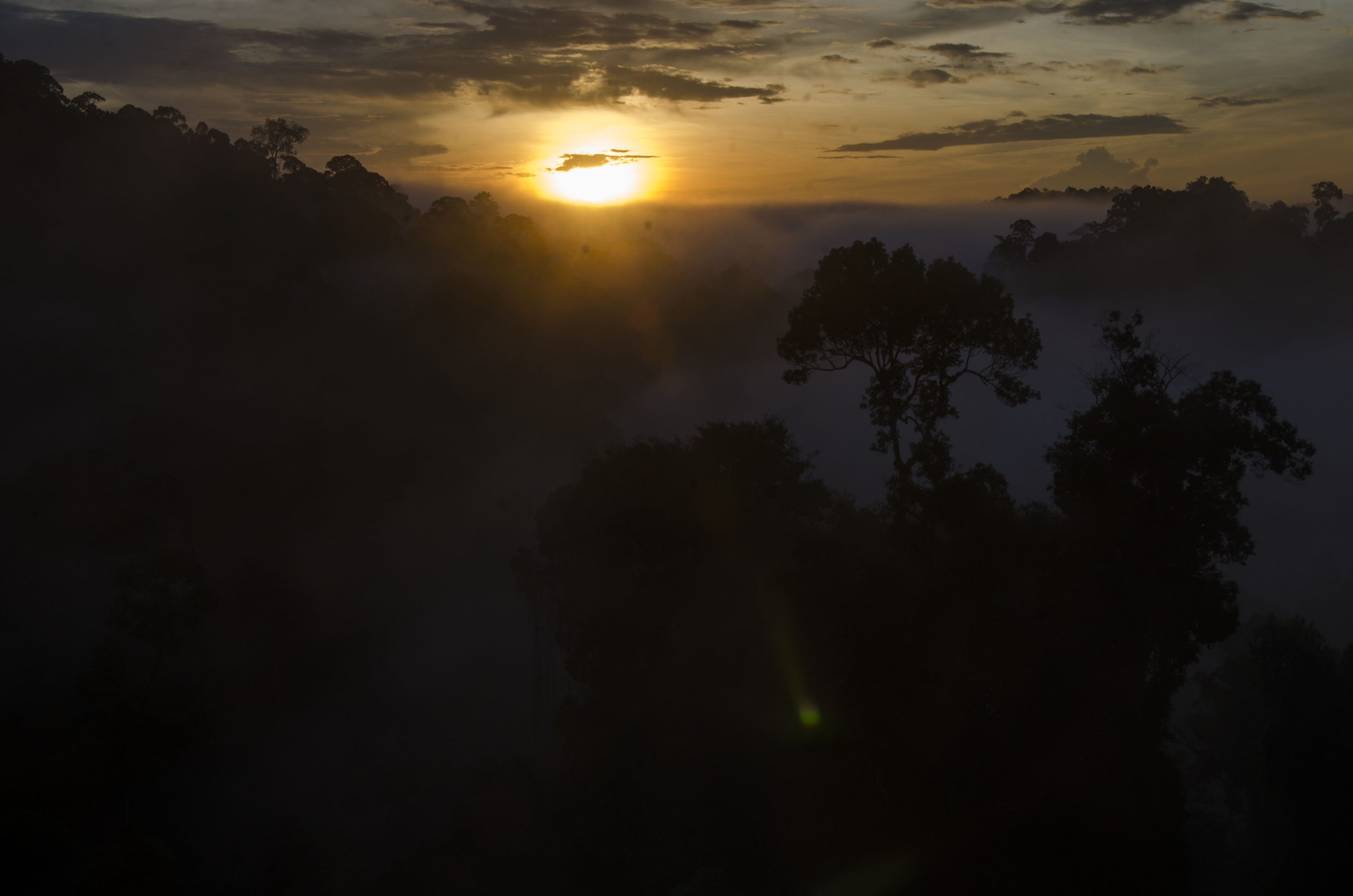
In the years since 2015, Deramakot's reputation has continued to build. Species once treated as a once-in-a-lifetime encounter anywhere in Borneo — Marbled Cat, Sun Bear, Otter Civet, Binturong, the Sunda Clouded Leopard — are today reported with a frequency that would have seemed implausible before the reserve opened to visitors.
The format that made this possible — slow night drives, patient spotlighting, extended multi-night stays rather than single-day visits — has since been adopted, in varying forms, by other Sabah forest reserves seeking to open their own land to wildlife tourism.
A forestry department's 1989 commitment to sustainable timber management has grown, three decades on, into one of the clearest examples in the region of conservation and tourism reinforcing one another.
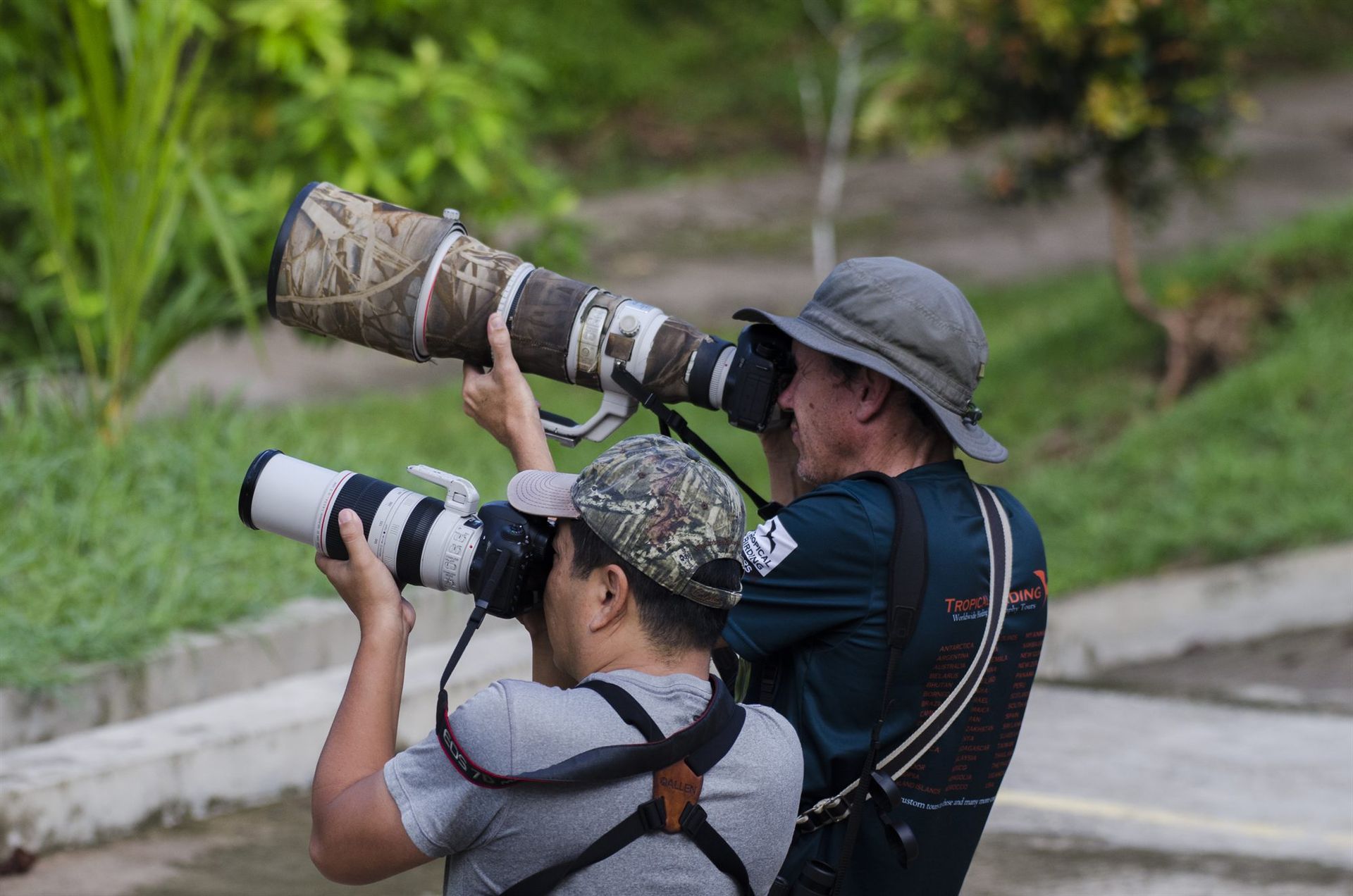
What began with a handful of independent mammalwatchers has, in the years since, become a fixture on the calendars of specialist wildlife travel companies around the world. Some now build whole itineraries around a week at Deramakot, timed to the reserve's spotlighting rhythm rather than a conventional daytime safari.
Small-group departures now run every year, aimed squarely at the reserve's specialist rarities, and the trip reports they leave behind — some logging more than forty-five mammal species in a single visit — have become one of the best running records of what the reserve actually holds.
None of this existed before 2015. That a working timber concession can now draw visitors back year after year is itself a kind of finding — proof, gathered one trip report at a time, that the approach Deramakot adopted in 1989 works.
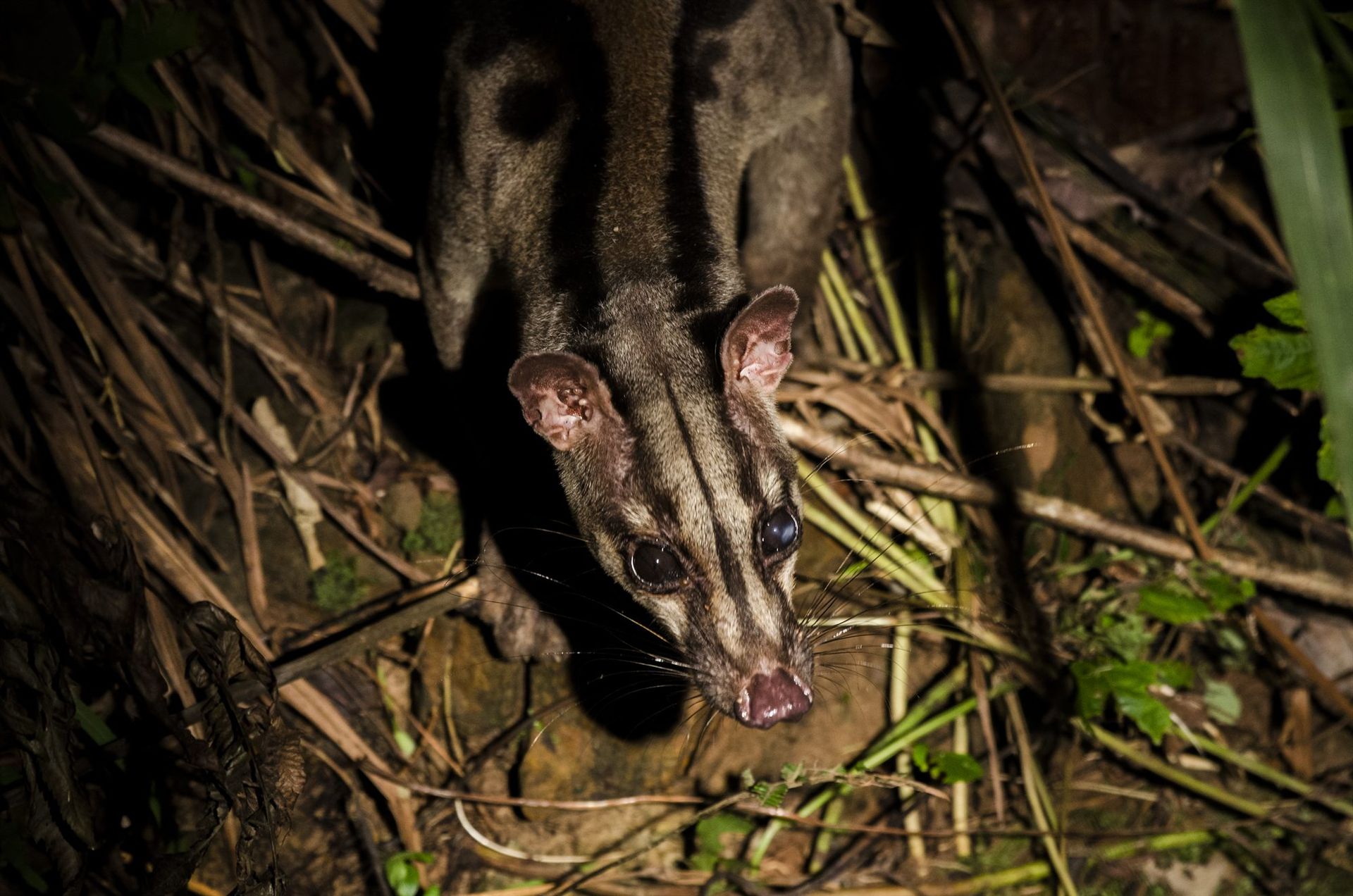
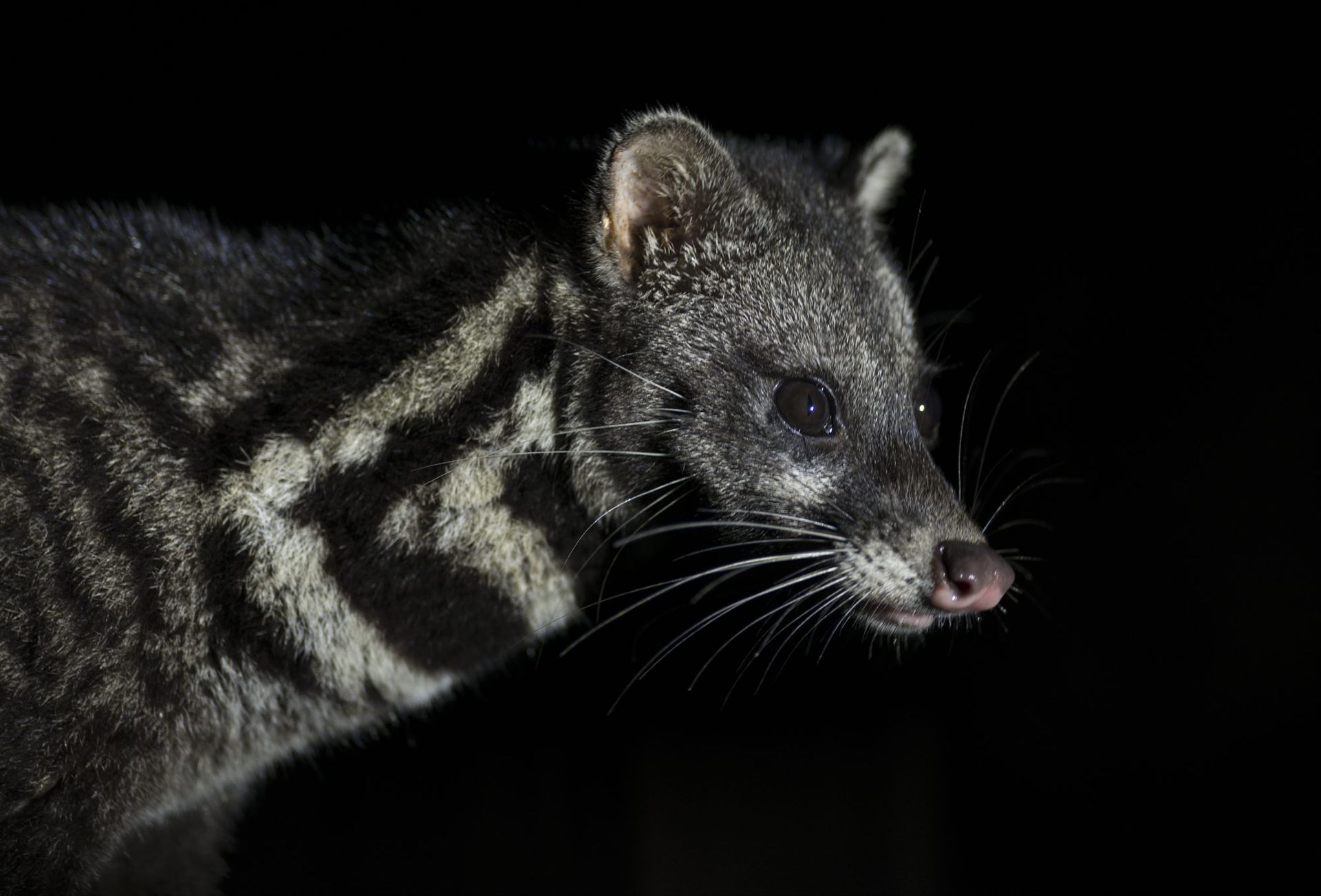
Unmistakable among Deramakot's civets, the Banded Civet carries bold dark bands across a pale cream coat, a pattern that breaks up its outline in the dappled beam of a spotlight. It roots earthworms and invertebrates from the leaf litter with an elongated, mobile snout.
Sightings typically come low to the ground, often crossing the main road or foraging just inside the treeline — moving alone, with a distinctive low, searching gait.
The largest and most frequently encountered of Deramakot's terrestrial civets — a heavily built, grey-brown animal marked with dark spots and bands and a strongly ringed tail. A generalist, taking fruit, small vertebrates and invertebrates as available.
Comfortable in disturbed and regenerating forest, it is one of the more dependable sightings on a night drive, usually crossing open road sections at a steady, confident pace.
A slender, fully arboreal civet named for the three faint dark stripes running down its back. Unlike the ground-foraging civets on the previous pages, it rarely descends to the road, instead moving through the mid and upper canopy along tangles of liana and branch.
Sightings are usually a pair of eyeshine high in the canopy, followed by patient tracking to confirm the animal's outline and tail. Largely frugivorous, and often located near fruiting fig trees.
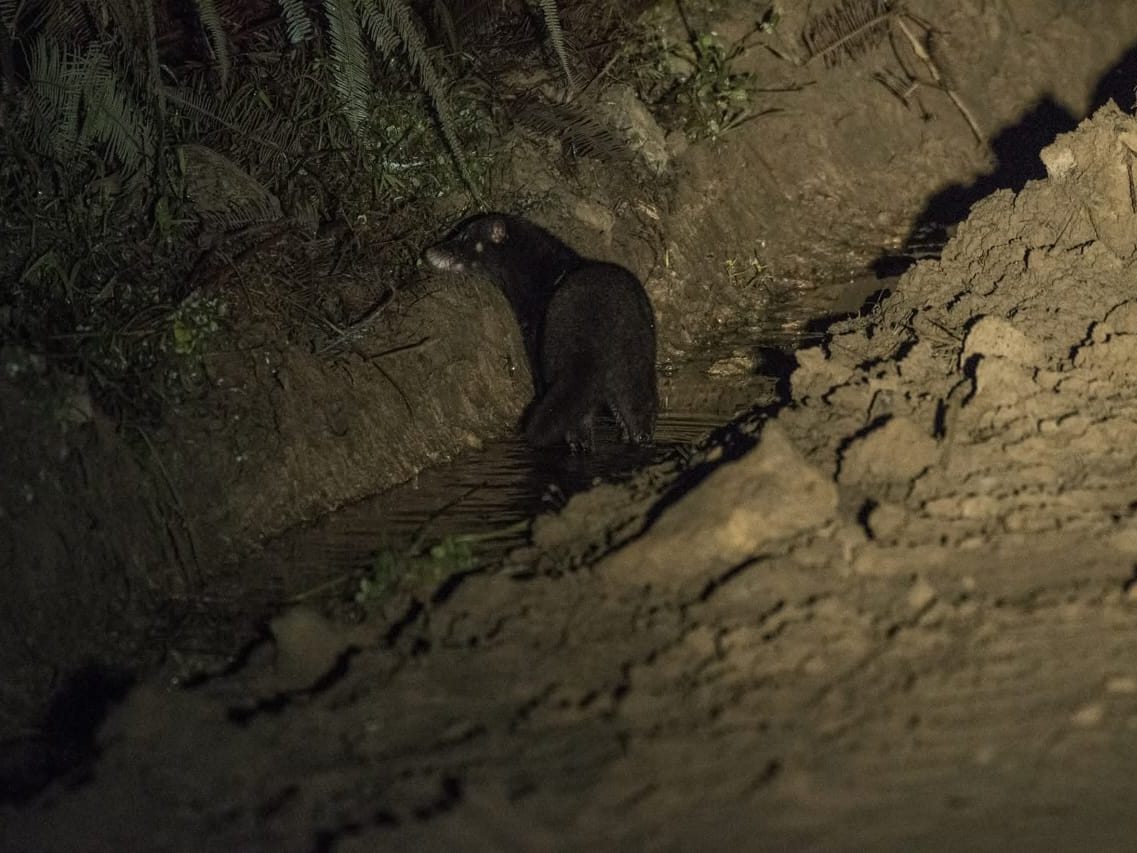
Otter Civet
One of the rarest and strangest civets in the world, with webbed feet, a broad flat muzzle and dense whiskers, built for hunting fish, crabs and frogs along streams. It is so seldom seen anywhere that a sighting is the highlight of a trip, and Deramakot is one of the very few places where visitors have a realistic chance.
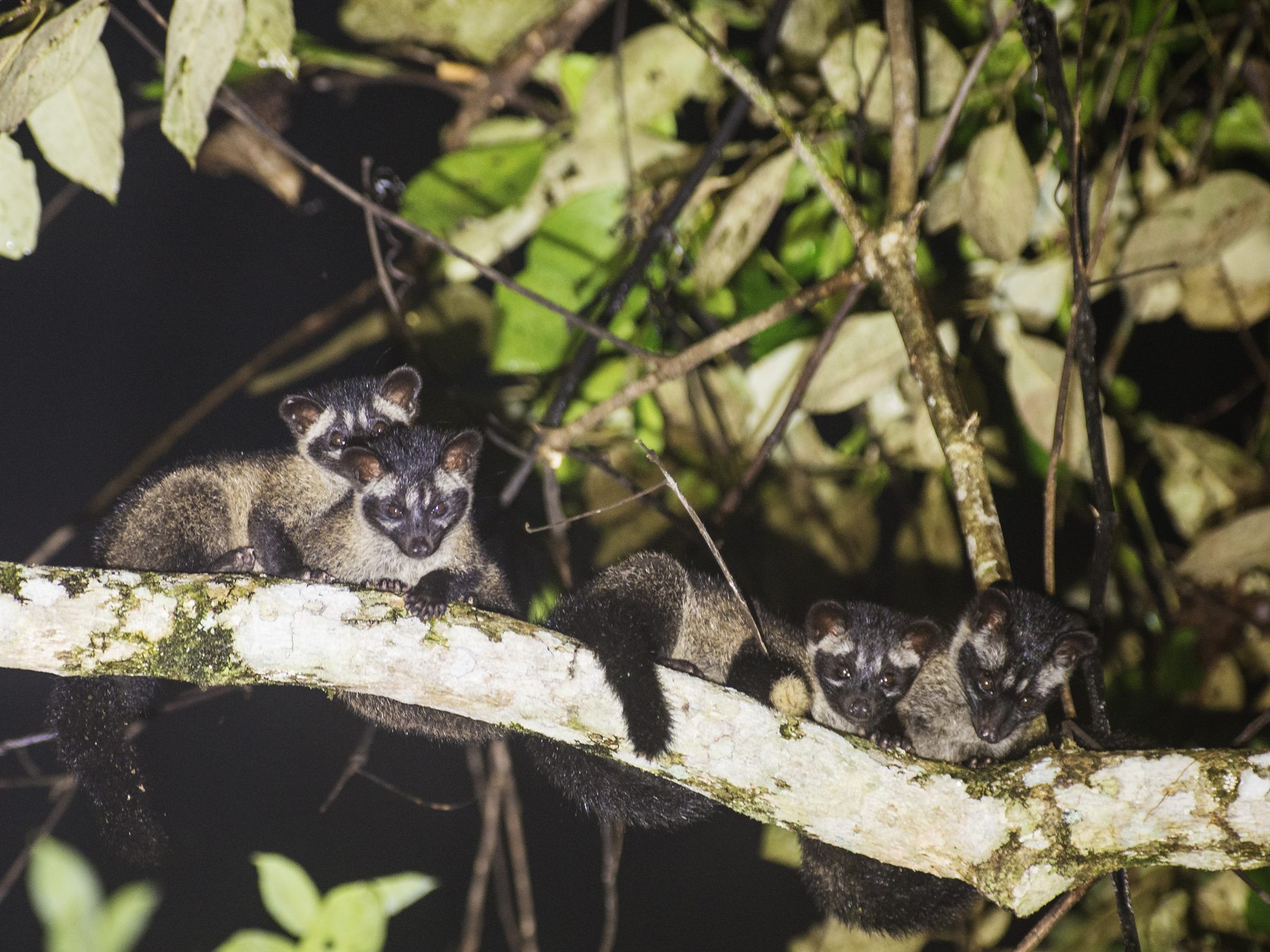
Island Palm Civet
Often the most frequently seen civet on a night drive: grey-brown with darker legs, faint spots and a pale face mask. It spends much of its time in trees eating fruit, and is regularly found in fruiting trees beside the road, sometimes several together.
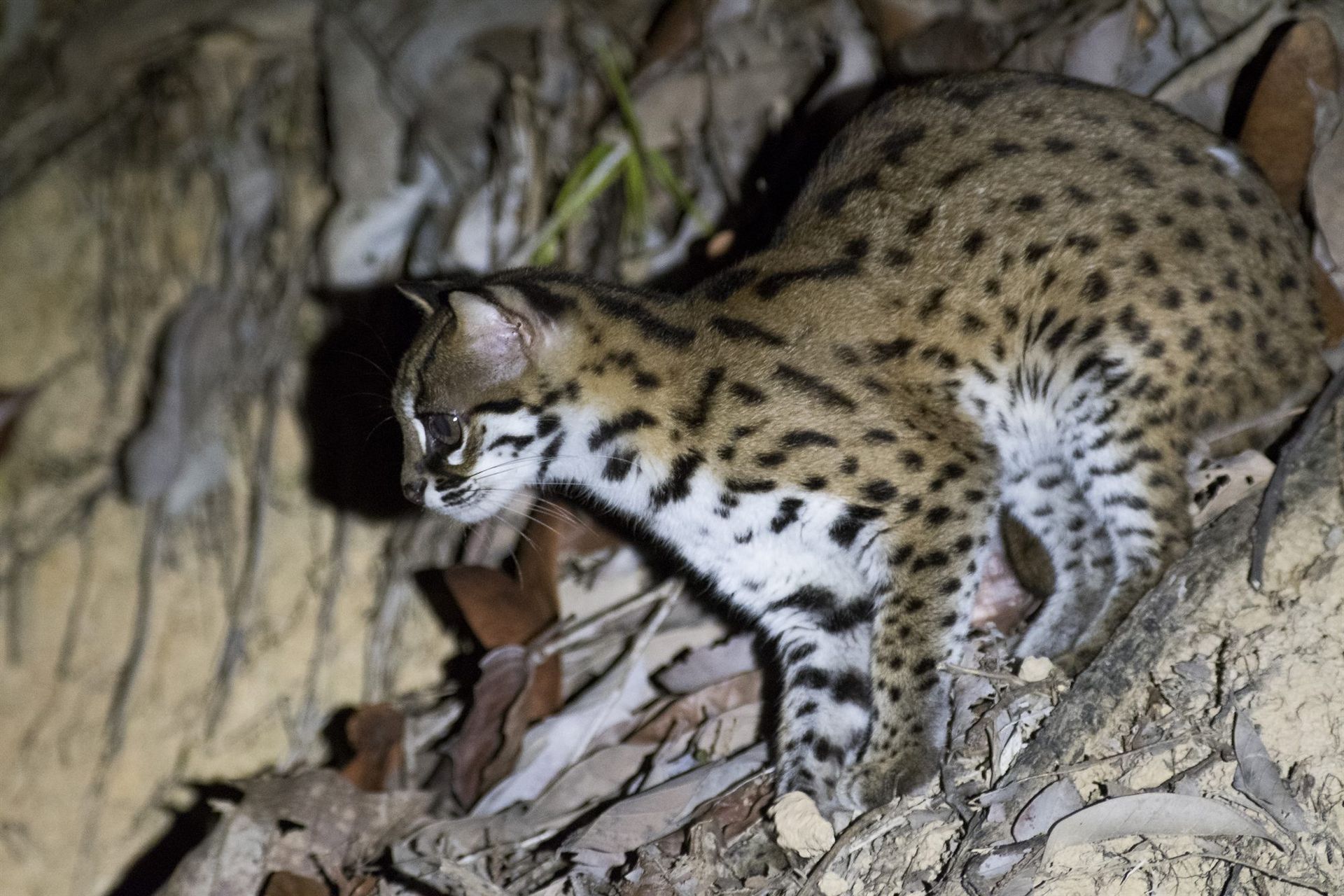
Roughly the size of a domestic cat, with a spotted golden coat, the Leopard Cat is Deramakot's most widespread small felid and often the first cat species a visitor records. It hunts rodents along road edges and regenerating forest patches, habitat that reduced-impact logging leaves in good supply.
Its eyeshine is bright and low to the ground — usually two points of light before the animal's full outline resolves in the beam.
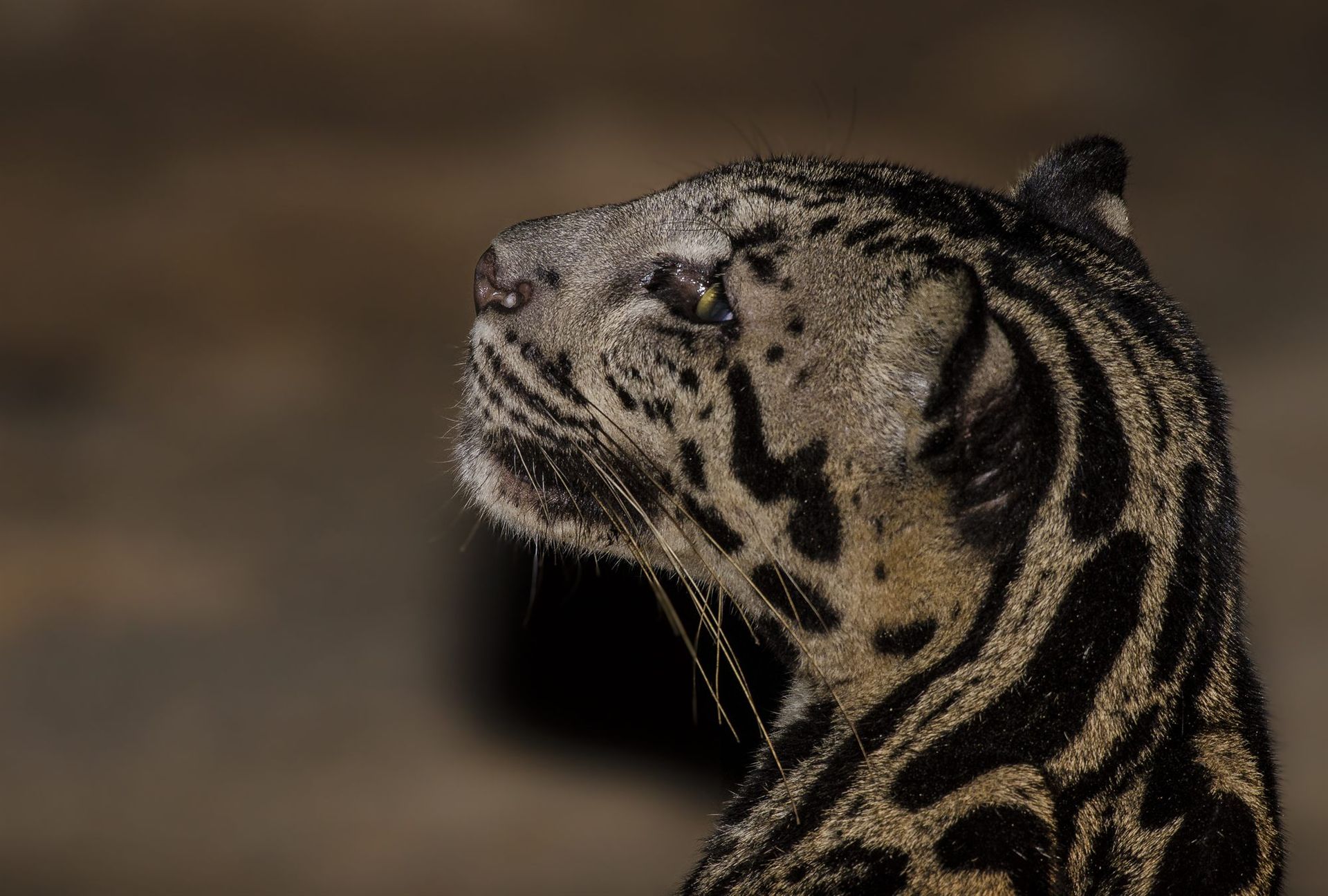
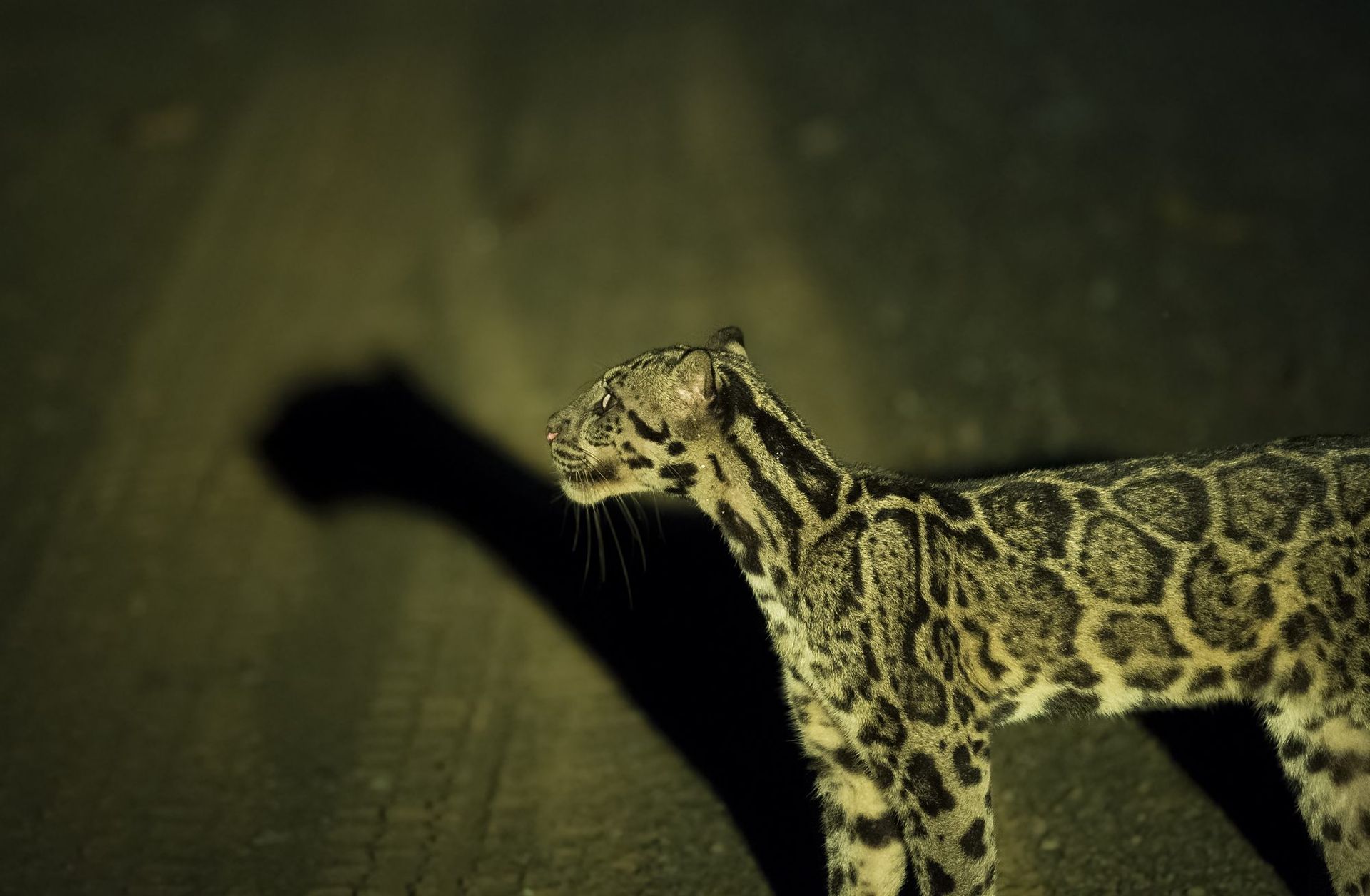
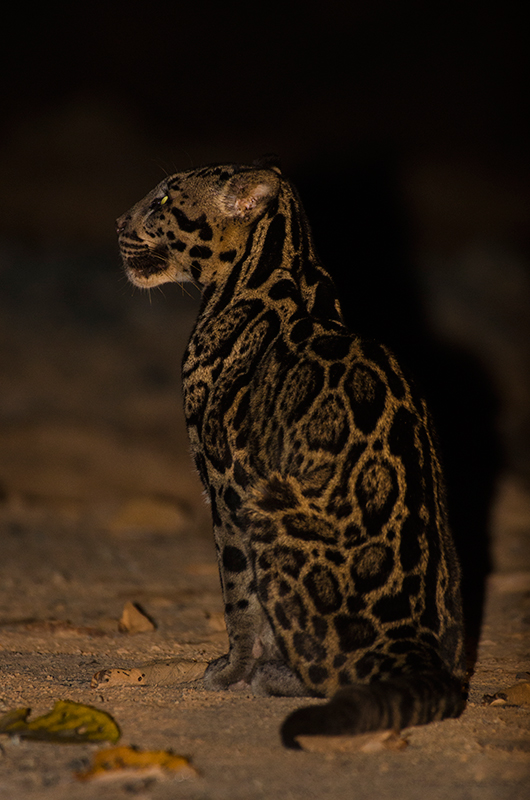
The largest cat in Borneo, and the animal most visitors hope for above all others. Named for the large, irregular cloud-shaped markings across its coat, it is equally at home on the ground and in the canopy, with proportionally the longest canine teeth of any living cat. Despite the name it is not a leopard at all, but a separate, ancient branch of the big-cat family.
Camera-trap surveys run between 2007 and 2023 across Deramakot and its neighbouring reserves identified 52 individual adults and recorded the oldest wild Sunda Clouded Leopard ever documented — a female estimated at roughly eight and a half years old. The same research found females about 68% harder to detect than males, likely because they spend more time away from the roads and trails where cameras are set.
Once considered close to mythical in Bornean forests, it is now recorded here with genuine, if still infrequent, regularity — a shift widely credited to the reserve's well-managed forest and healthy prey base. Fewer than 10,000 mature individuals are thought to remain across Borneo and Sumatra combined.
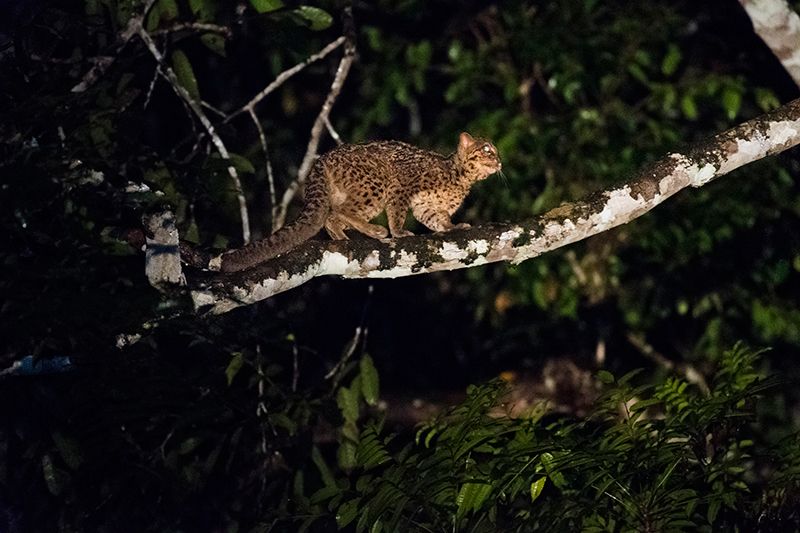
A small, exceptionally beautiful cat with a marbled coat pattern reminiscent of a miniature clouded leopard, and a tail often as long as its body. Highly arboreal, it uses that tail for balance while moving through branches after birds, squirrels and small mammals.
Few sites anywhere in its range offer the sighting frequency now associated with Deramakot, where it has become one of the reserve's calling-card species.
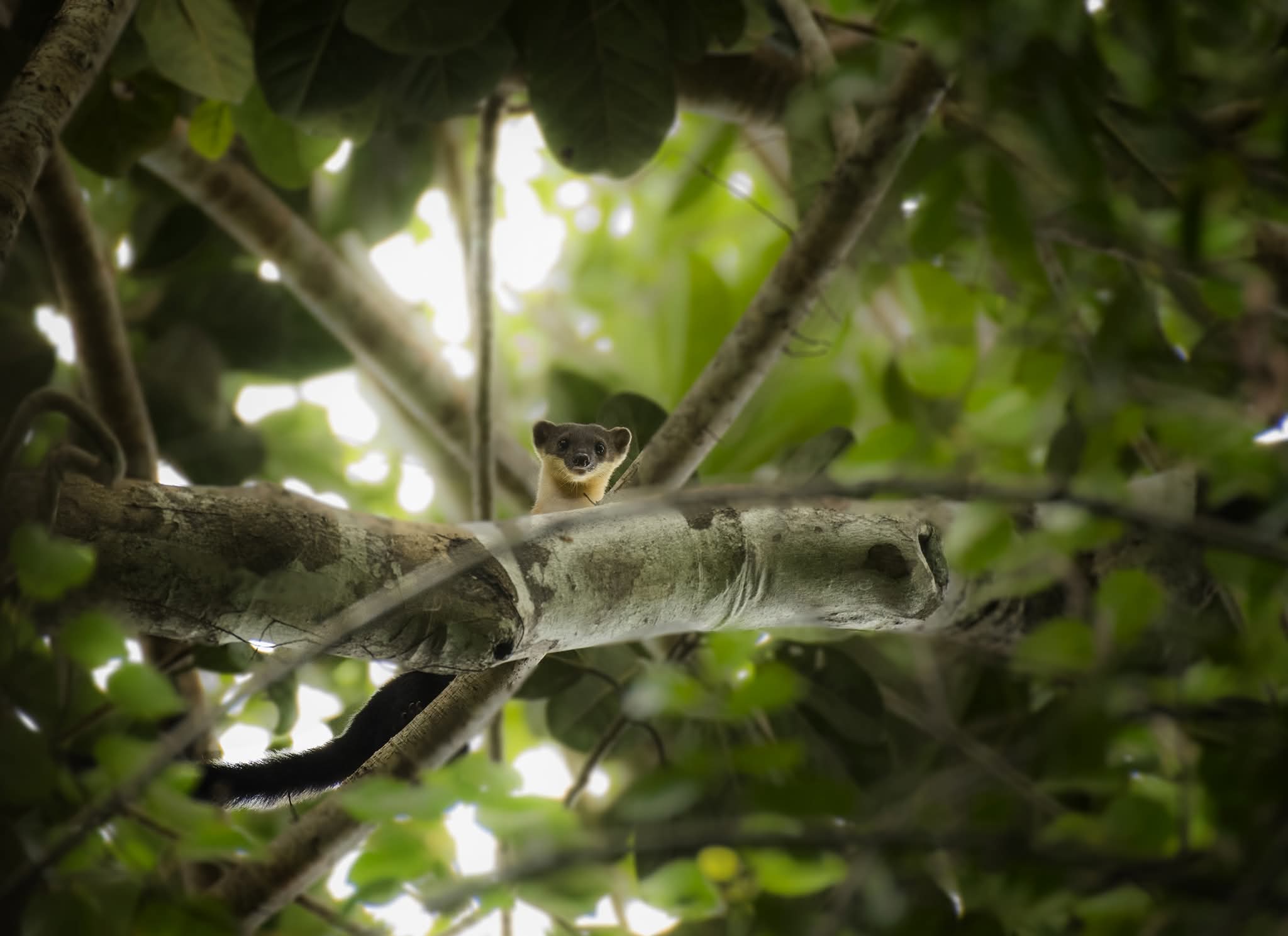
A long-bodied, glossy member of the weasel family, dark brown with a bright yellow throat and bib and a long black tail. It is as quick on the ground as in the trees, and hunts squirrels, birds and rodents, as well as taking fruit and honey. It is often found in pairs or small family groups.
Despite living across the reserve, the marten is rarely seen at Deramakot. It moves fast and keeps to cover, so most sightings are a few seconds long, a face looking down from a branch or a tail disappearing into the foliage. Treat one as a bonus, never as something to plan on.
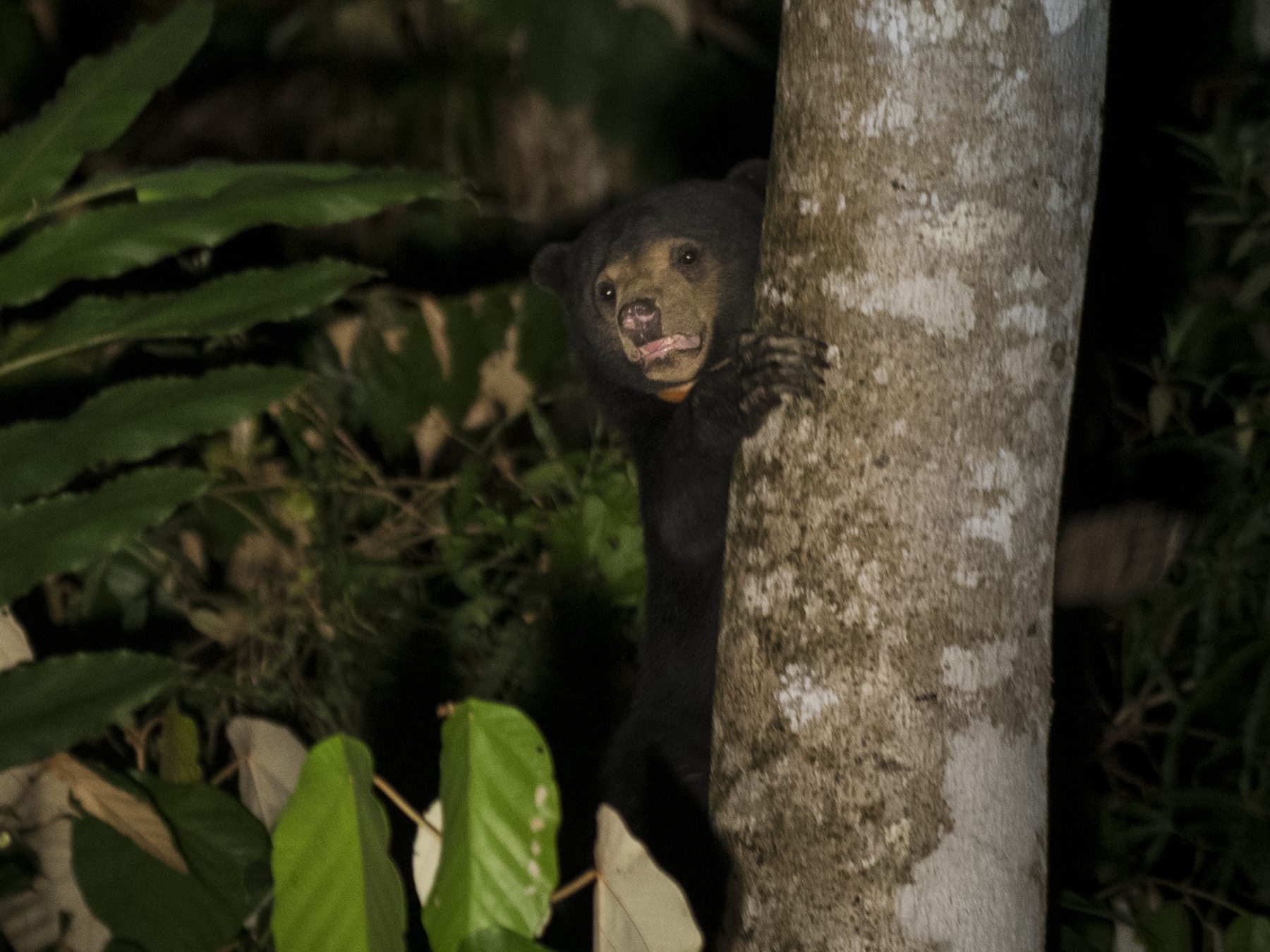
Sun Bear
The smallest of the world's bears, black with a pale muzzle and a cream or orange chest patch that is different on every animal. A strong climber, it tears into trees for honey and termites with long claws and a very long tongue. At Deramakot it turns up on night drives, sometimes high in a tree, sometimes crossing the road.
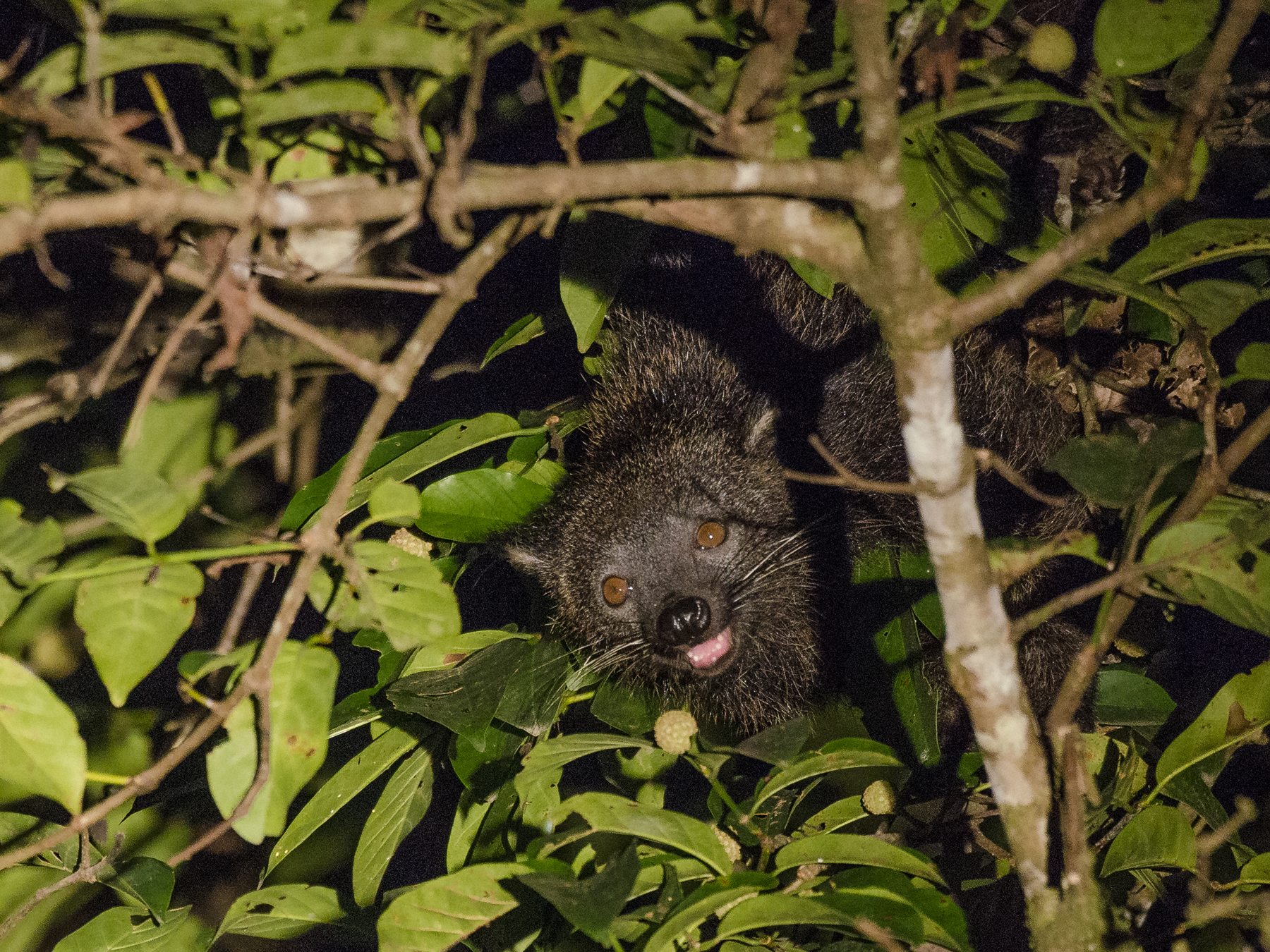
Binturong
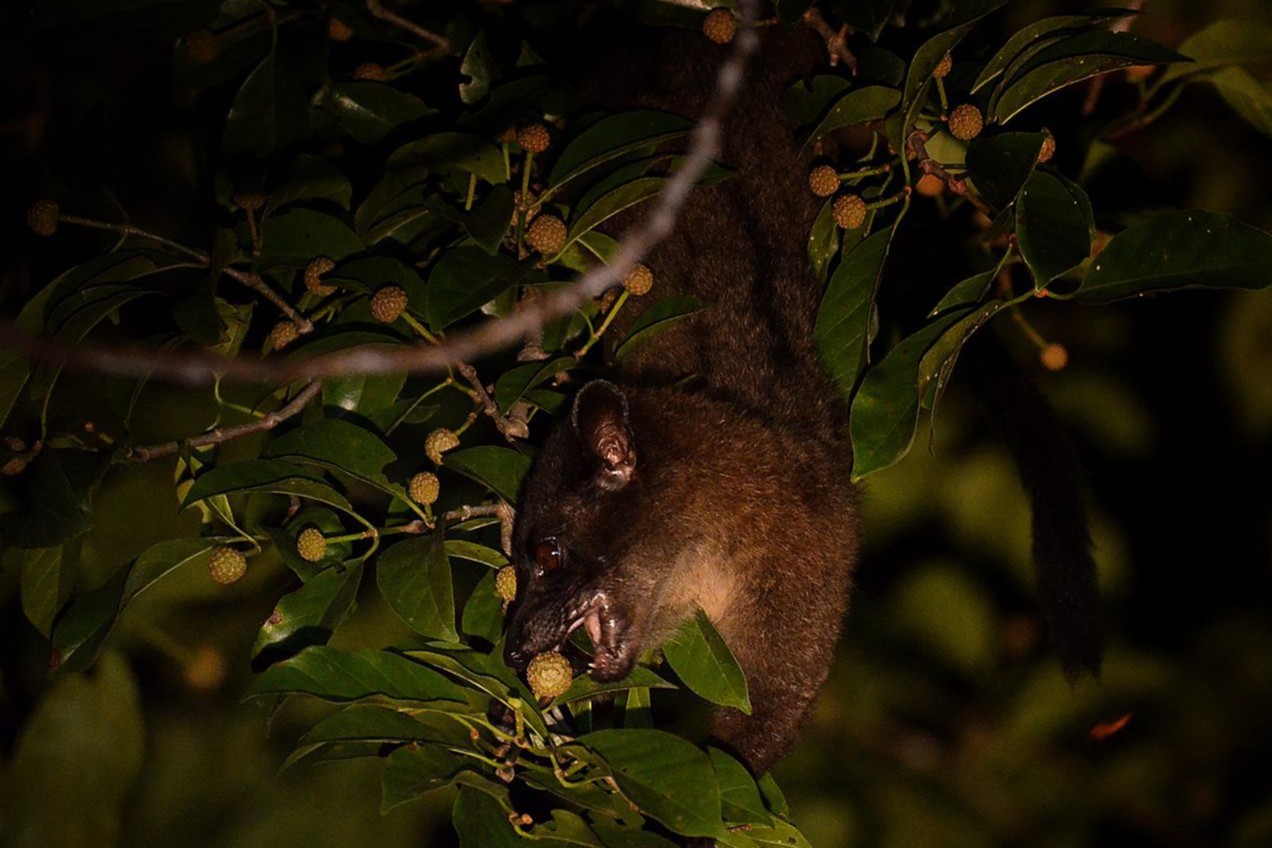
Often called the bearcat, though it is neither: a large, shaggy civet with tufted ears and a thick tail it can grip branches with. It feeds mostly on fruit, figs especially, and moves slowly through the canopy. Spotlighting a fruiting fig at night is the best way to find one, and it often stays put long enough for a good look.
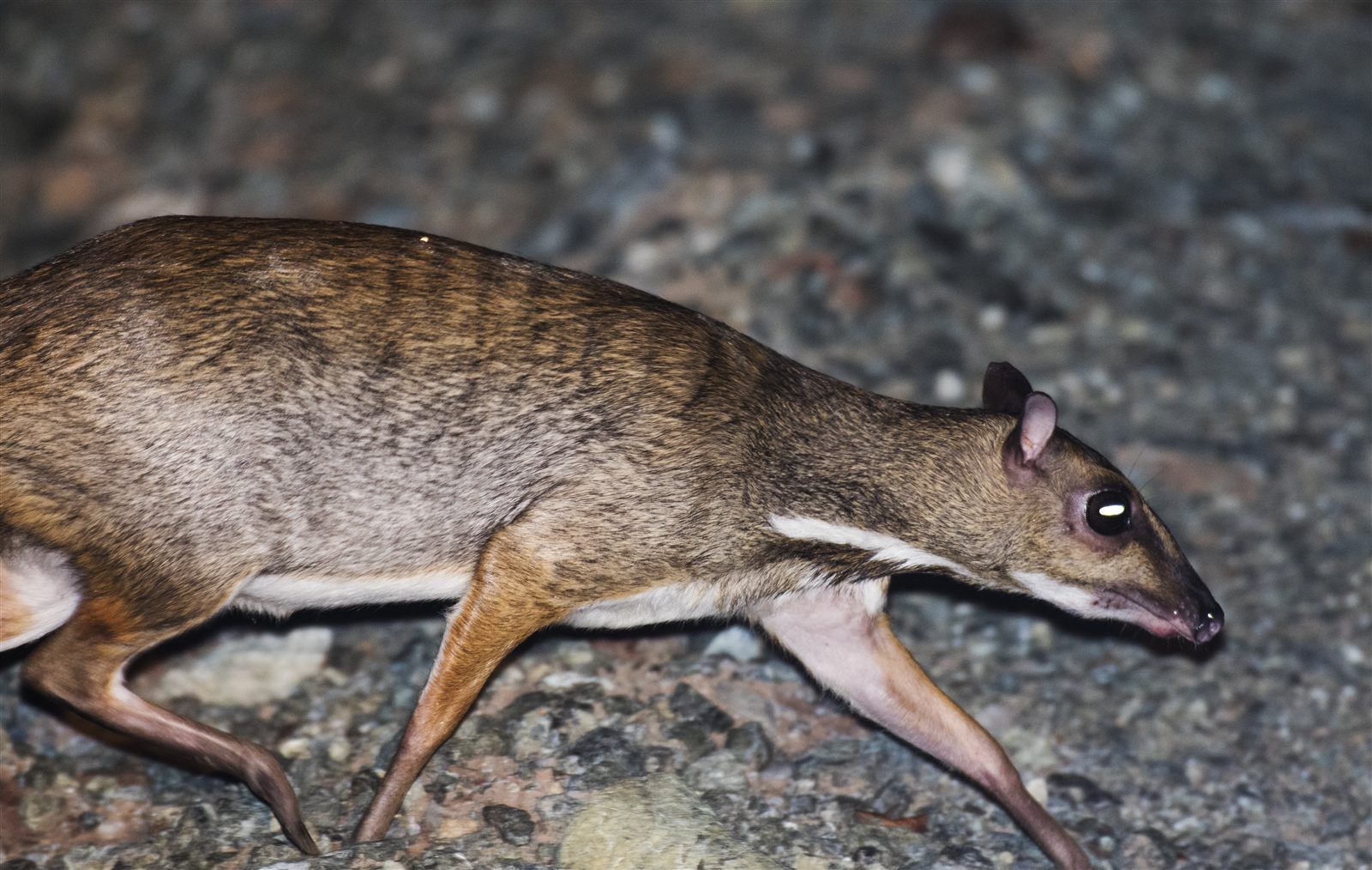
Deramakot hosts both the Greater and Lesser Mouse-deer, among the smallest hoofed mammals on Earth, distinguished mainly by size and throat markings — delicate, deer-like animals standing barely knee-high, with slender legs and small tusk-like canines rather than antlers.
Frequently the first mammal of the night, often frozen at the road edge in the beam before bolting for cover — a reliable warm-up before the reserve's rarer specialists appear.
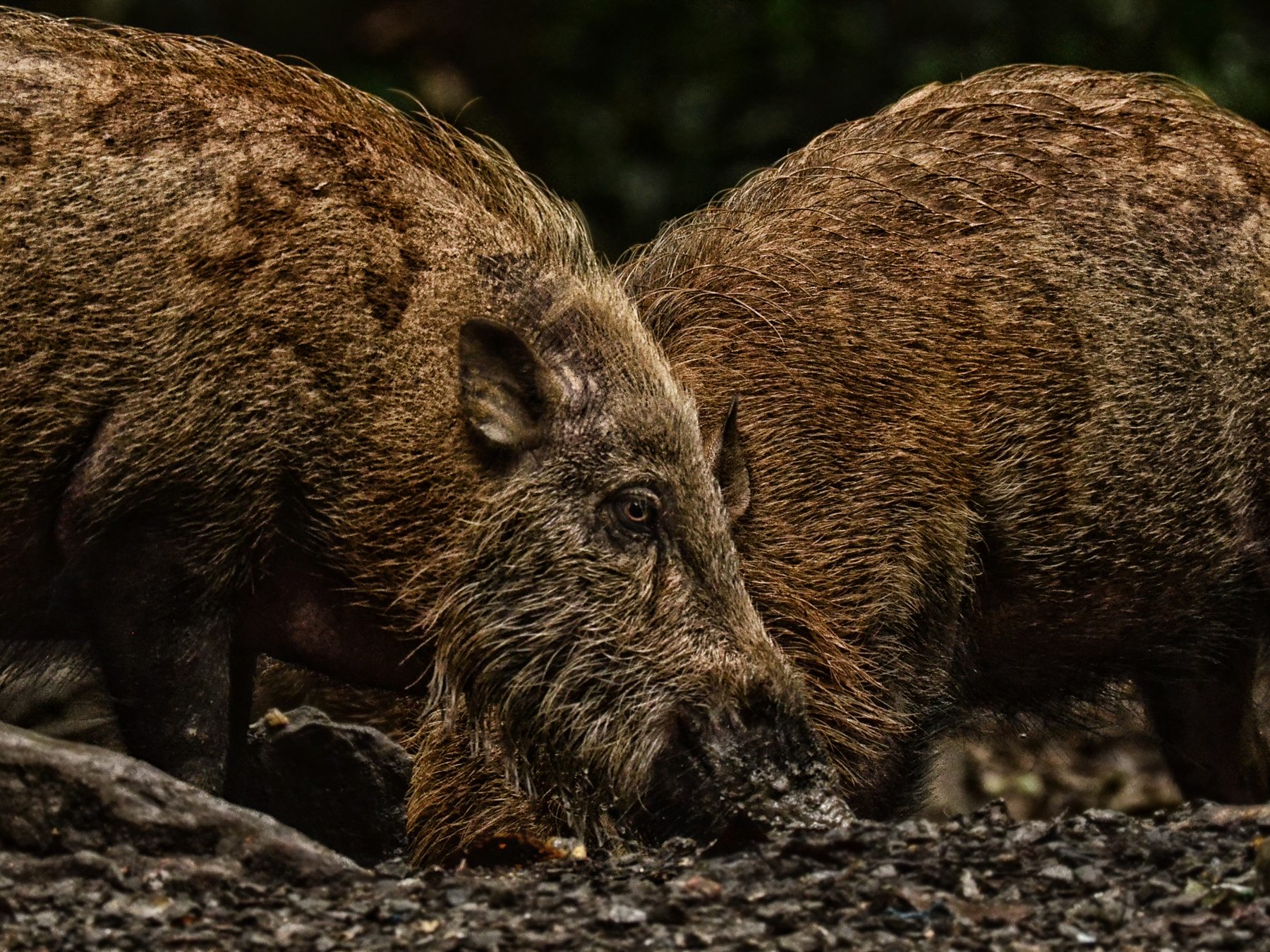
Bornean Bearded Pig
A tall, lean wild pig with a long head and a bushy pale beard along the snout. It roams widely for fallen fruit, seeds and roots, and in big fruiting years groups can travel long distances following the food. In 2021 African swine fever reached Sabah and killed very large numbers of Bearded Pigs across the state. They are now coming back at Deramakot, and family parties are again being seen along the roads.
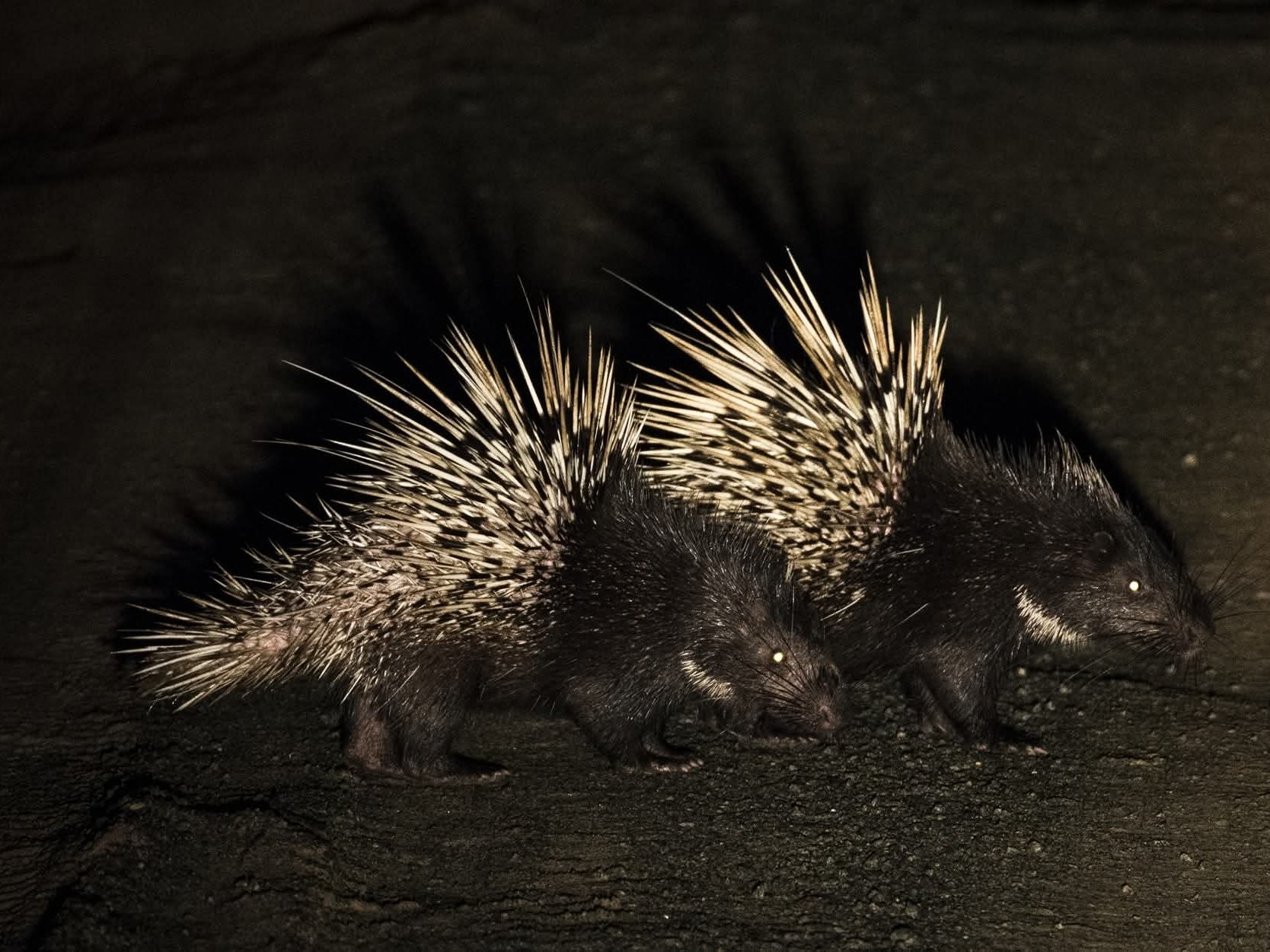
Malayan Porcupine
A large, ground-dwelling rodent armed with long black-and-white quills, which it raises and rattles when threatened. It forages at night for roots, fallen fruit and bark, and spends the day in a burrow. Night drives sometimes find one walking along or crossing the road.
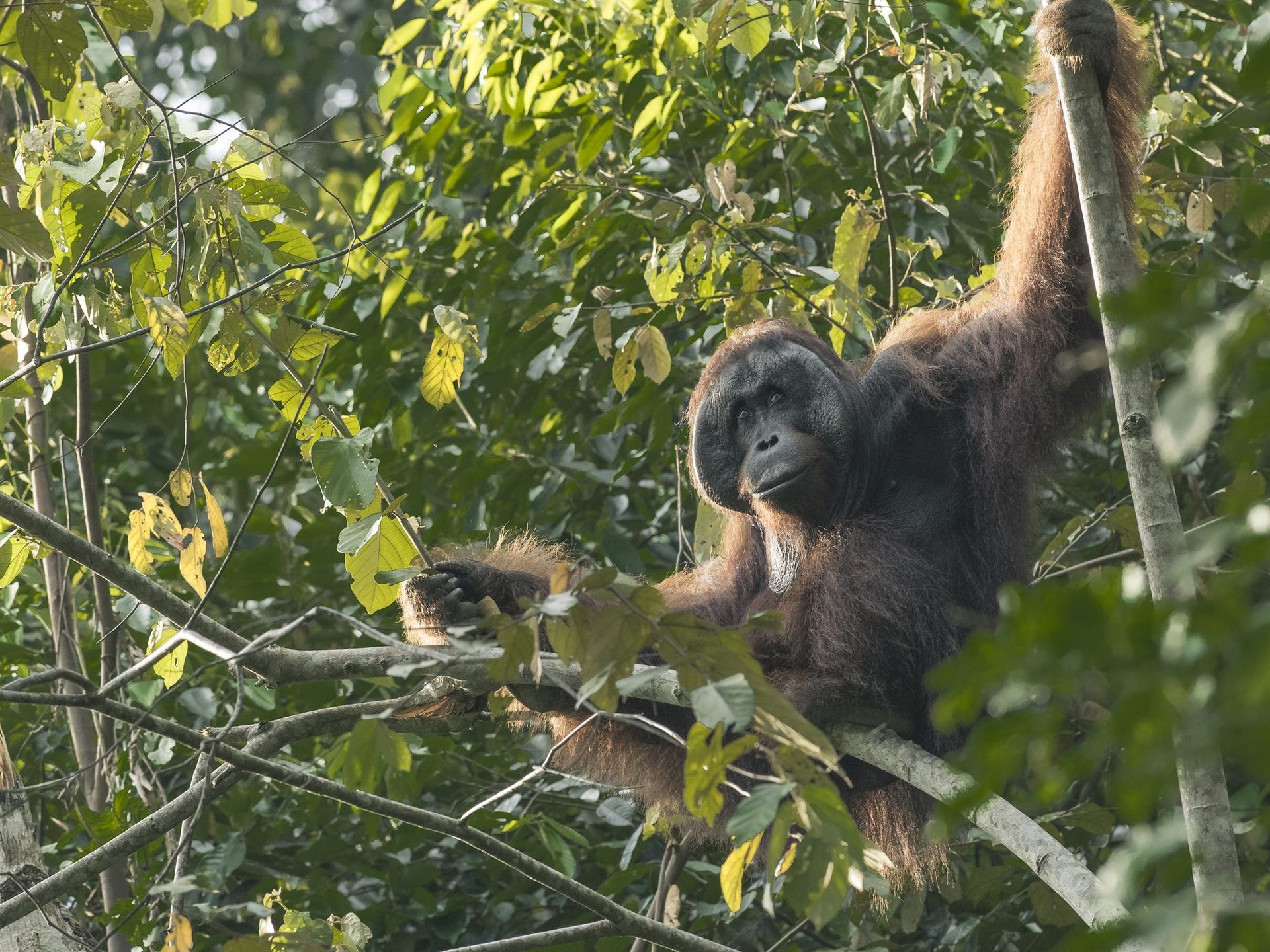
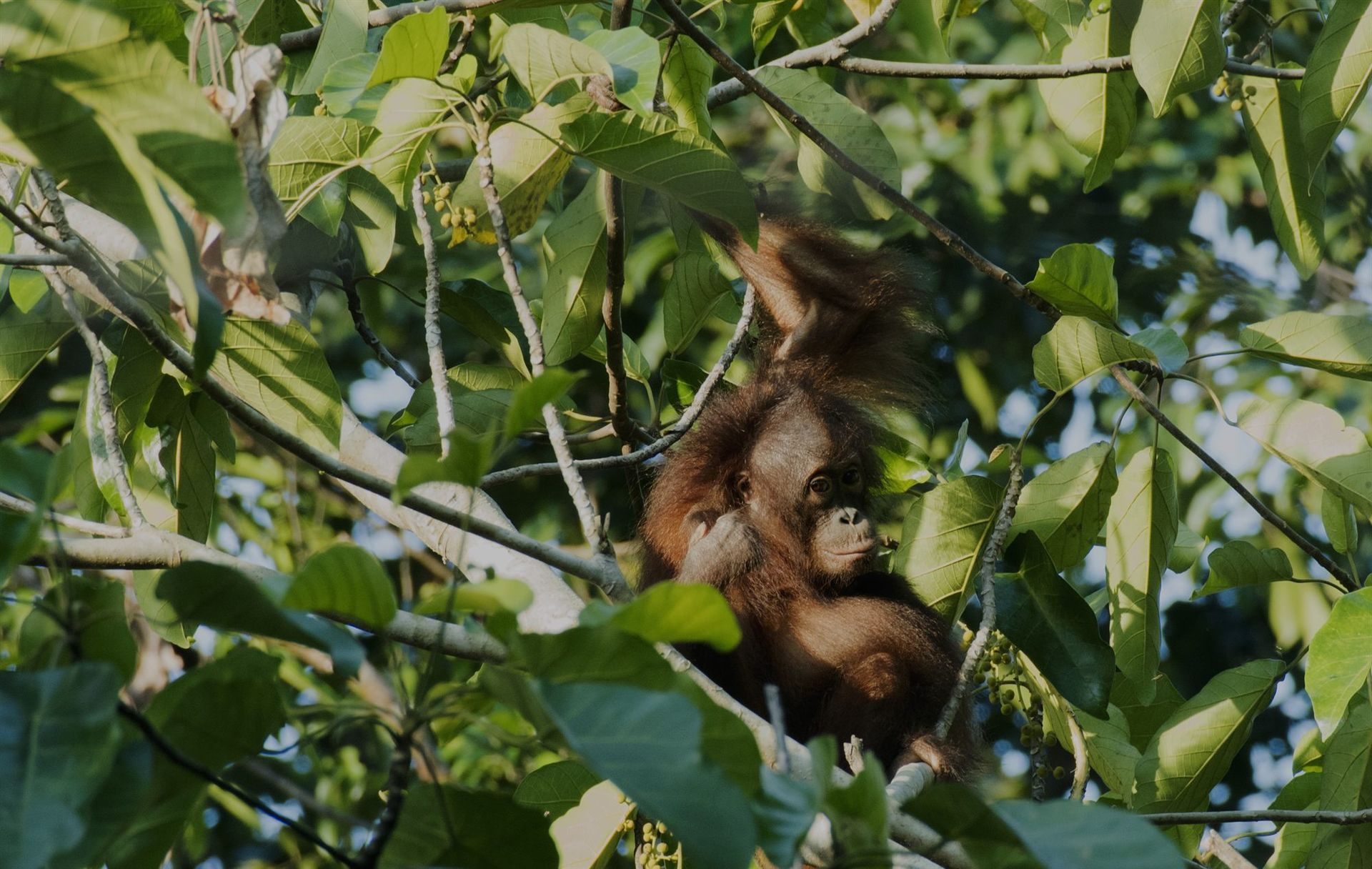
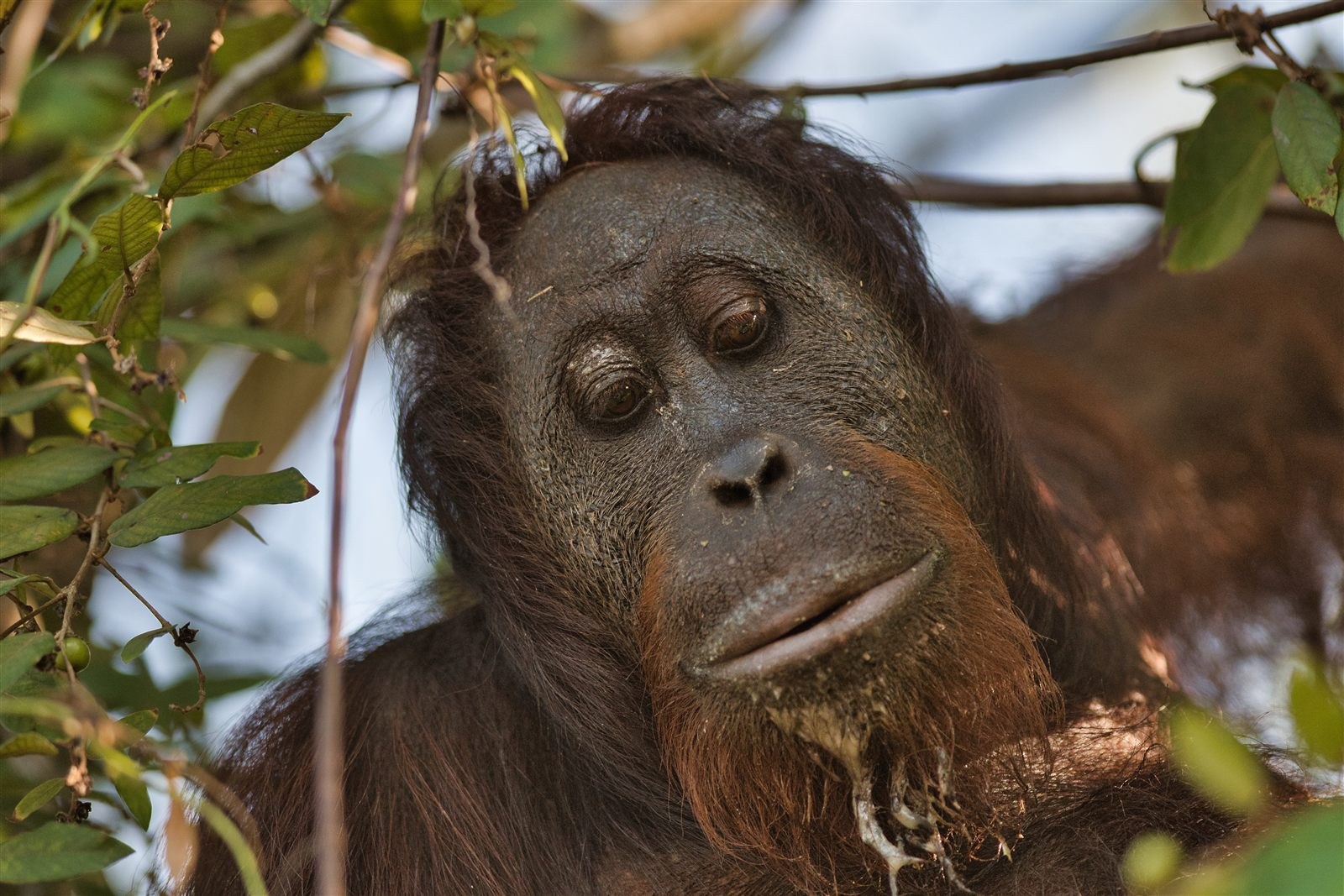
Deramakot's continued support of a healthy Orangutan population is one of the strongest arguments for the reduced-impact logging approach the reserve pioneered. A study modelling the reserve's management — "The Opportunity Cost of Engaging in Reduced-Impact Logging to Conserve the Orangutan" — found Deramakot held the highest Orangutan densities recorded among the Sabah forests compared, evidence that adequate regrowth periods between harvests and the deliberate retention of key food trees can outweigh the disturbance of controlled logging.
Sightings here are a daytime activity — a distant rustle of canopy resolving into a red-brown shape moving deliberately through the branches, or a fresh sleeping platform spotted from the road at dawn.
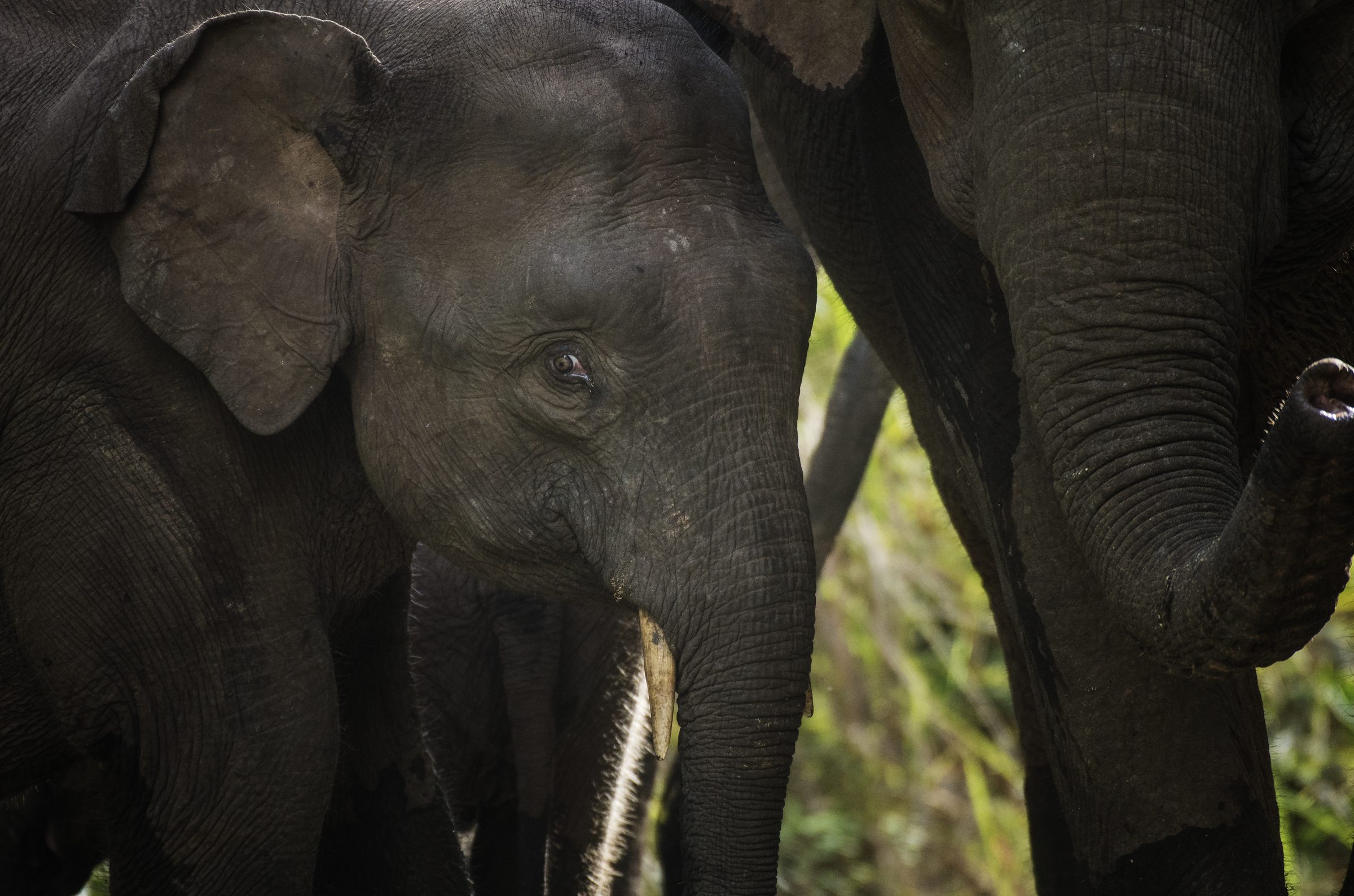
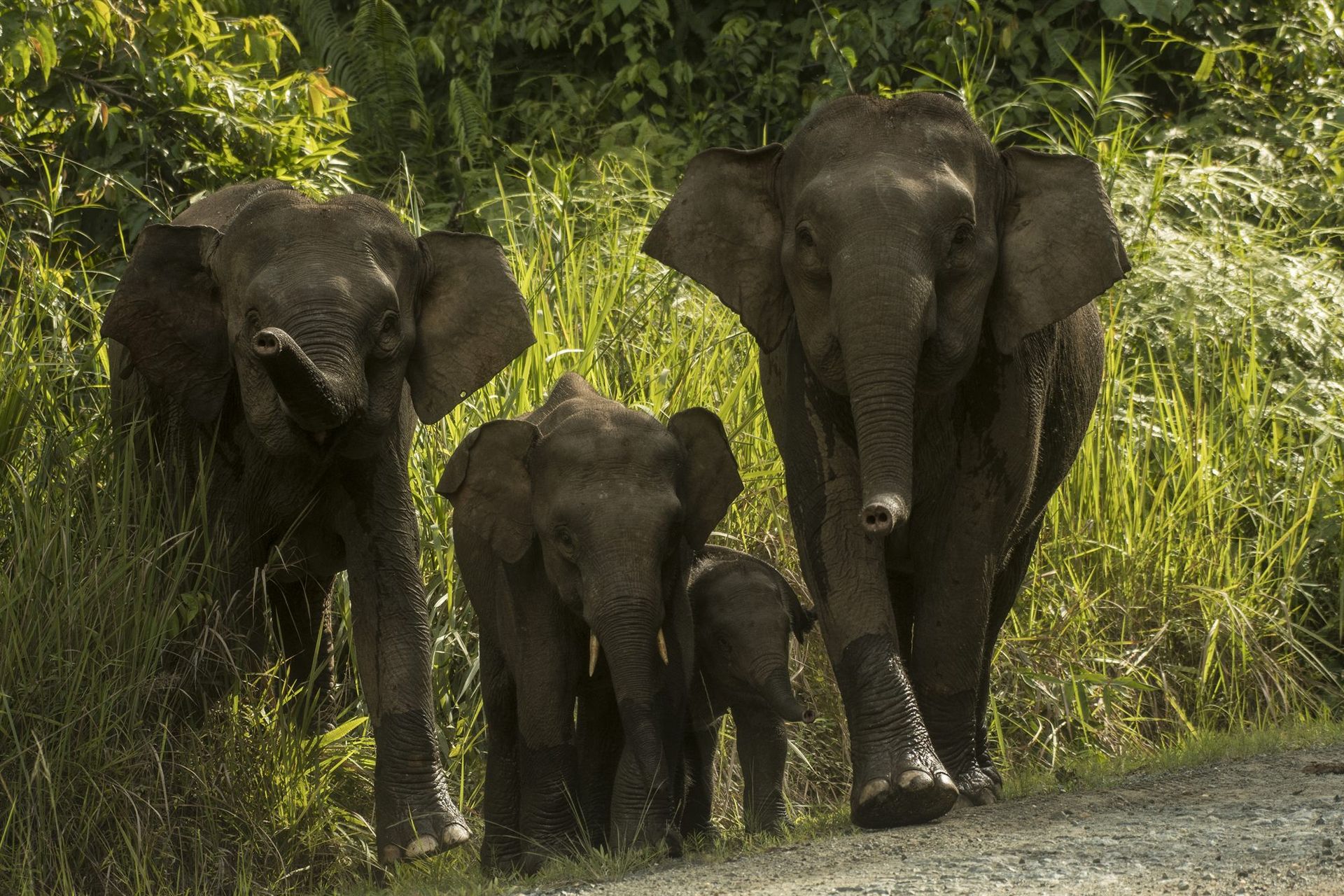
The smallest and, by most accounts, gentlest subspecies of Asian elephant, found nowhere else in the world outside Borneo's northeast. Genetic studies suggest the population has been isolated long enough to be considered a distinct evolutionary lineage rather than a simple regional variant, with proportionally larger ears, a straighter tusk and a famously placid temperament compared to mainland relatives.
Deramakot sits within the wider Kinabatangan–Sabah landscape the population moves through, and herds move through the reserve rather than living there year-round. When they do, a sighting is hard to miss: browsed vegetation and fresh dung along the road often give notice before the animals themselves appear, usually as a loose family herd feeding unhurried at the treeline.
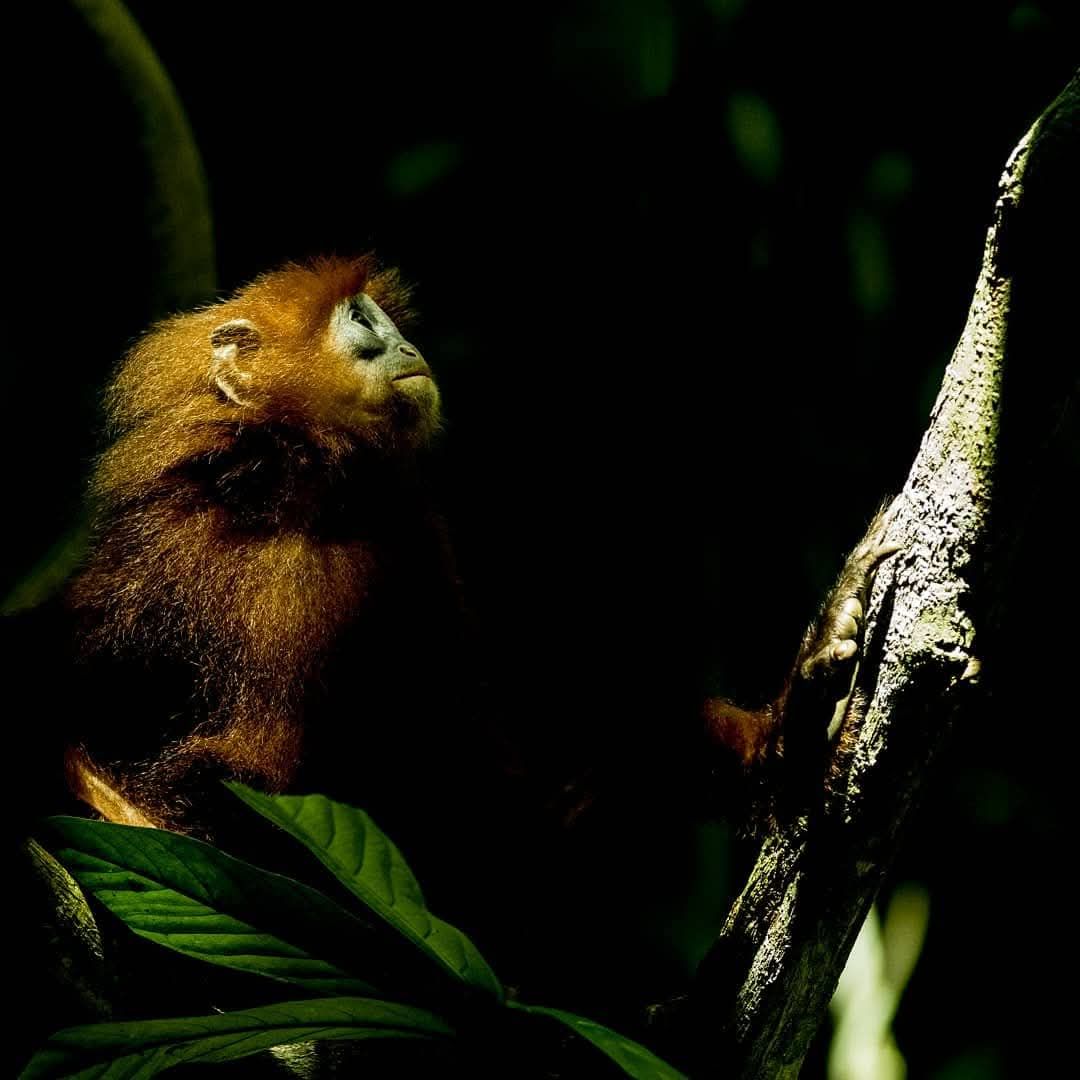
A striking, deep russet-red leaf monkey endemic to Borneo, typically encountered in small family troops moving through the mid-canopy on morning foraging rounds. Almost entirely folivorous, favouring young leaves and shoots.
Its habituation to vehicle traffic along Deramakot's main road makes it one of the more approachable primates in the reserve for daytime photography.
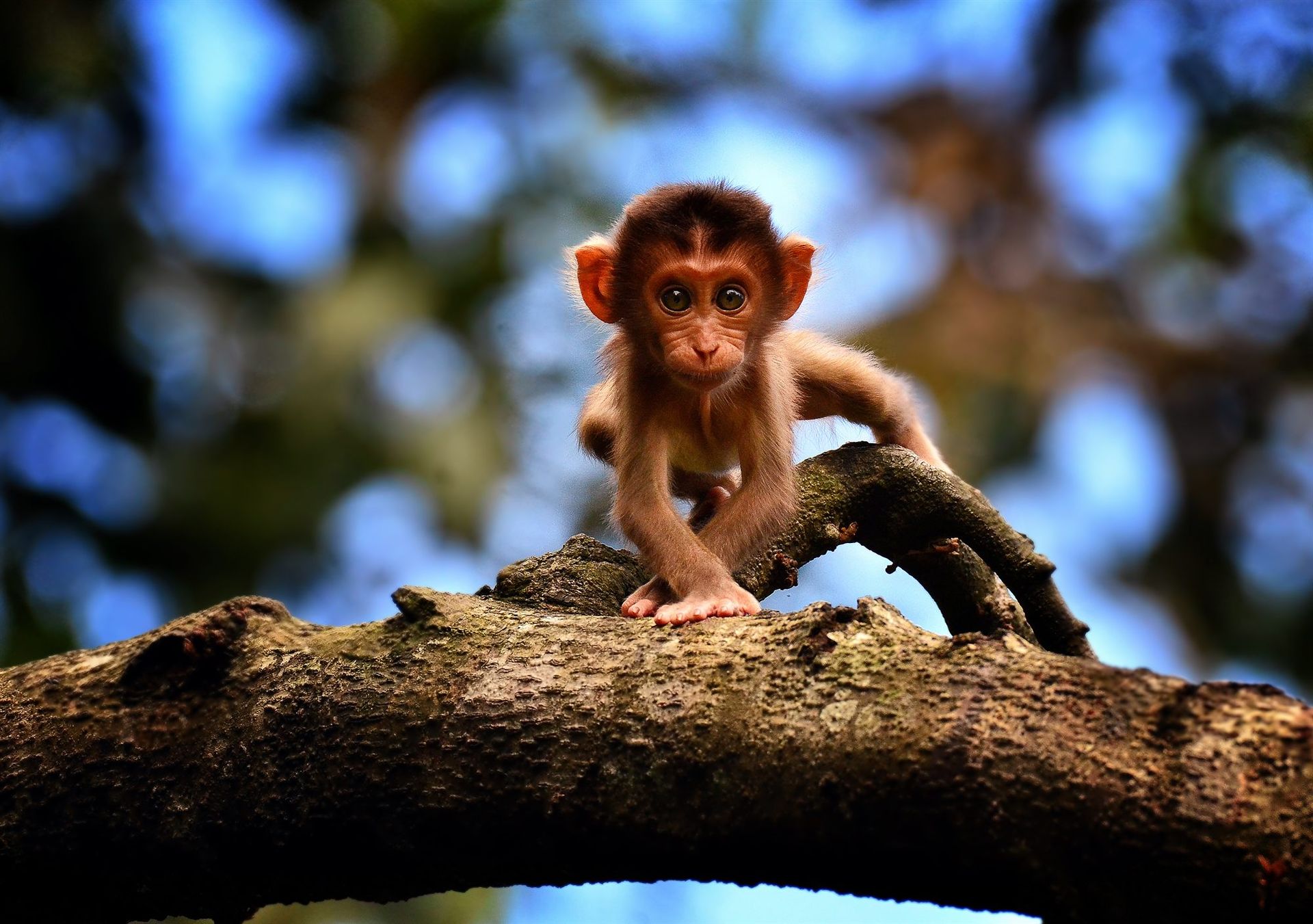
Named for its short, upward-curled tail, this robust macaque moves through Deramakot in large, active troops, foraging on the ground and in the lower canopy for fruit, seeds and invertebrates.
Troops can number several dozen individuals, their movement often first announced by falling fruit husks and rustling understorey before any animal is visible.
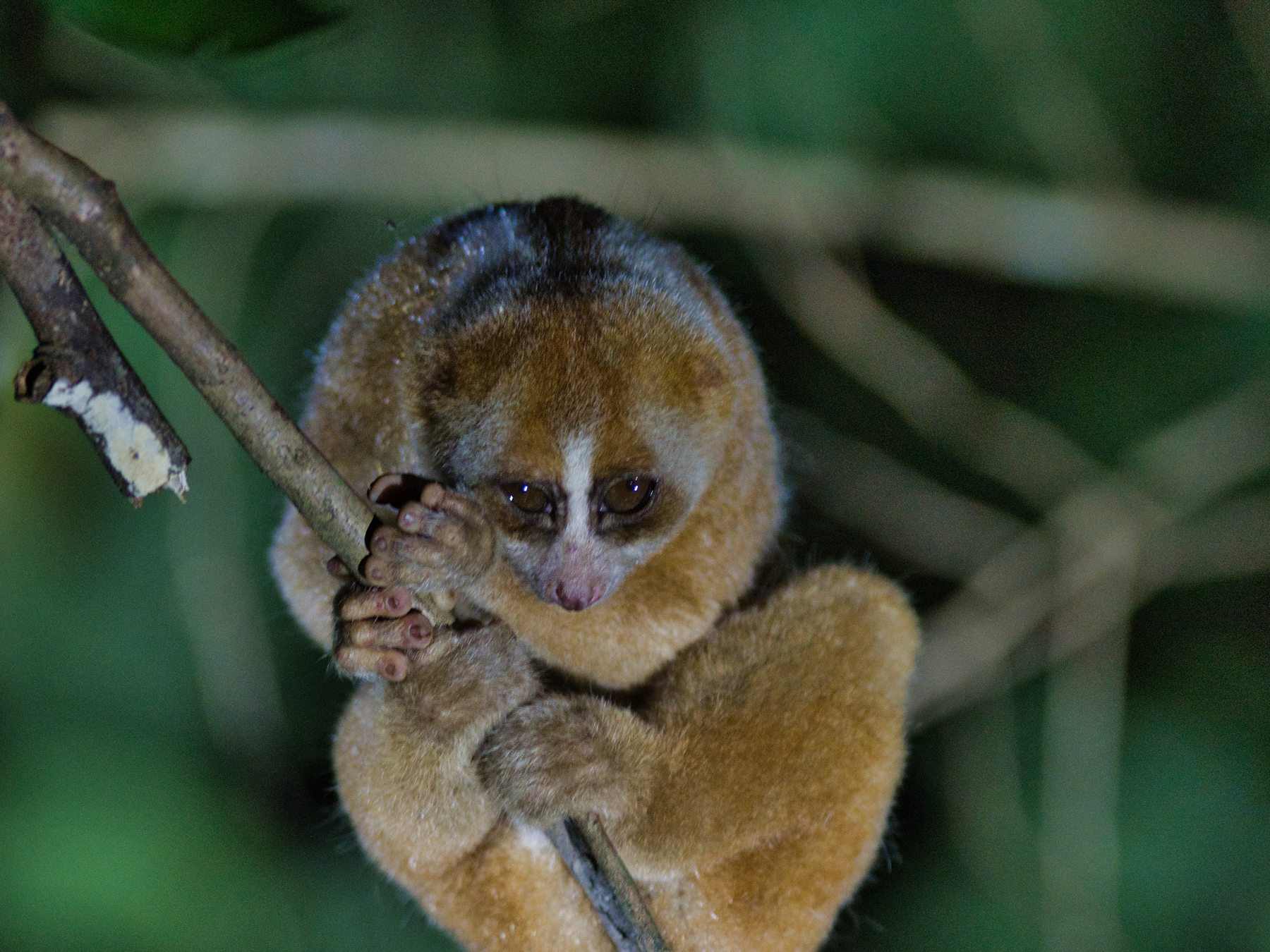
Philippine Slow Loris
A small, round-eyed primate in thick golden fur that climbs with slow, deliberate hand-over-hand grips. It feeds at night on insects, fruit and plant gum, and is one of the few venomous mammals: glands on its upper arms produce a toxin it mixes with saliva. Its bright orange eyeshine is one of the easier things to pick out on a night drive.
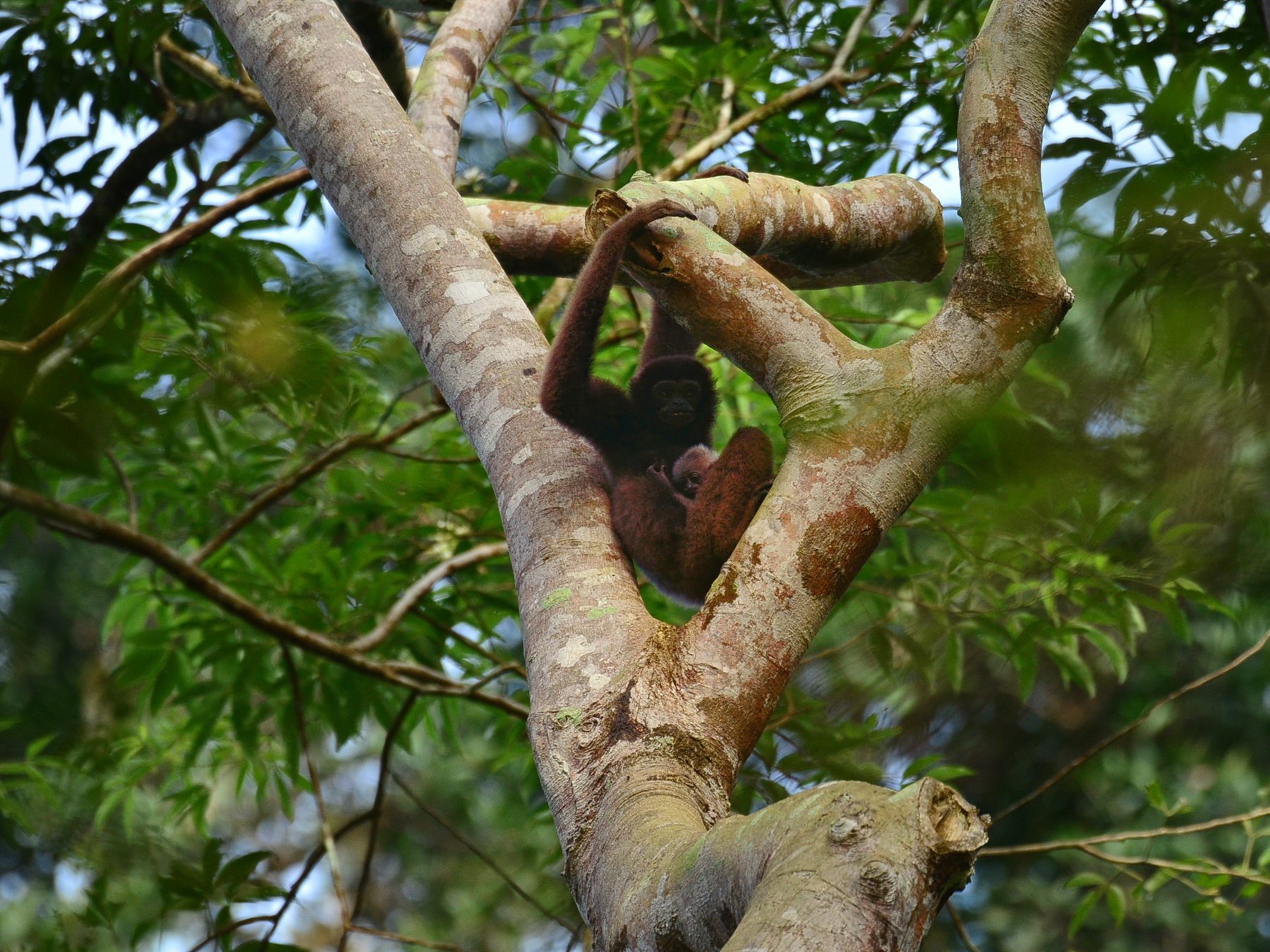
Bornean Gibbon
Heard far more often than seen. Gibbon families sing loud, rising songs at dawn that carry for kilometres across the forest, one of the best sounds of an early morning at Deramakot. They travel through the canopy by swinging arm over arm, and each small family group holds its own territory.
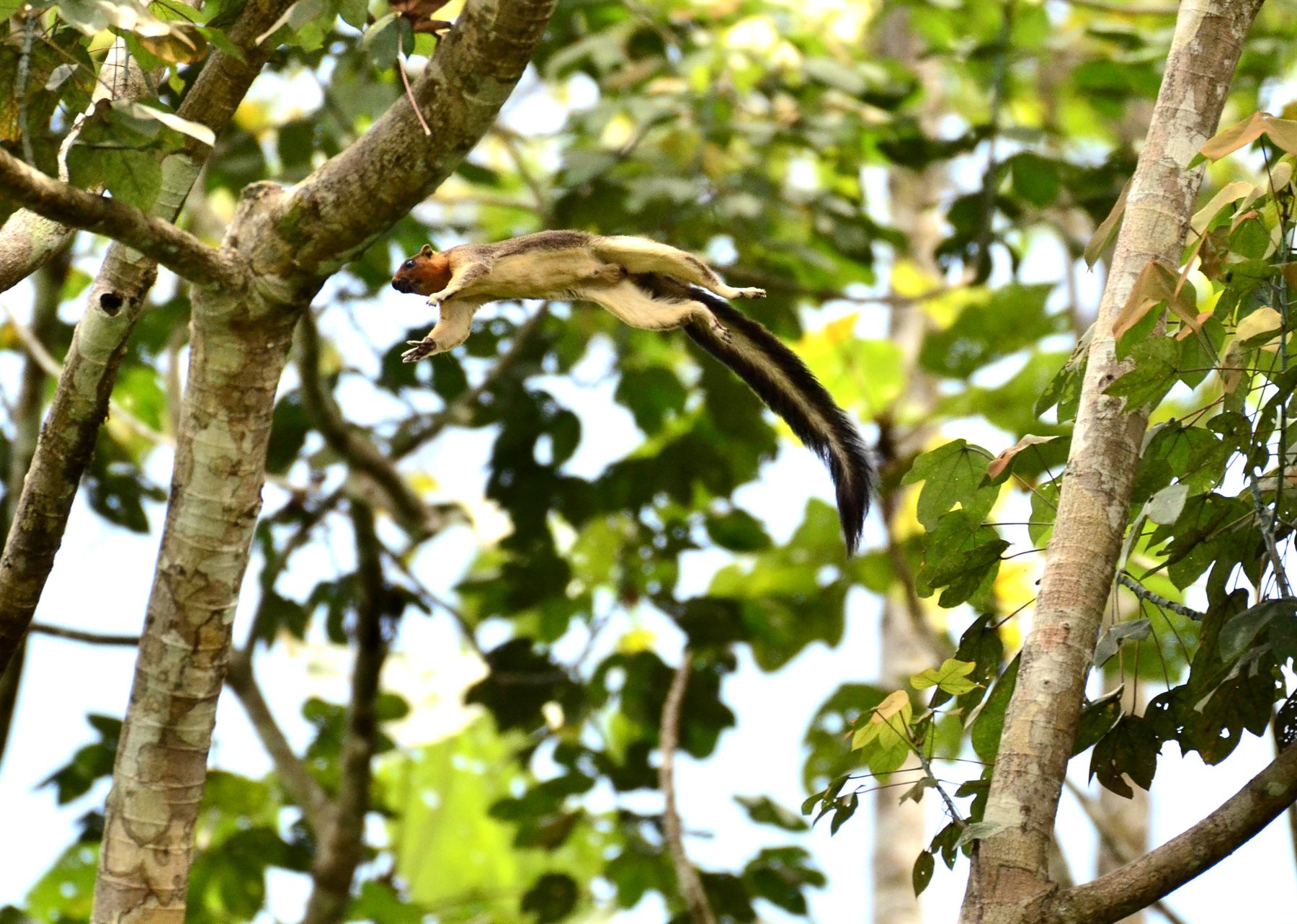
Sunda Giant Squirrel
A big, bushy-tailed squirrel with cream underparts, a rusty head and a long banded tail. It is common at Deramakot and often seen by day, leaping from crown to crown with its tail streaming behind. The tail steadies the squirrel in the air and on thin branches.
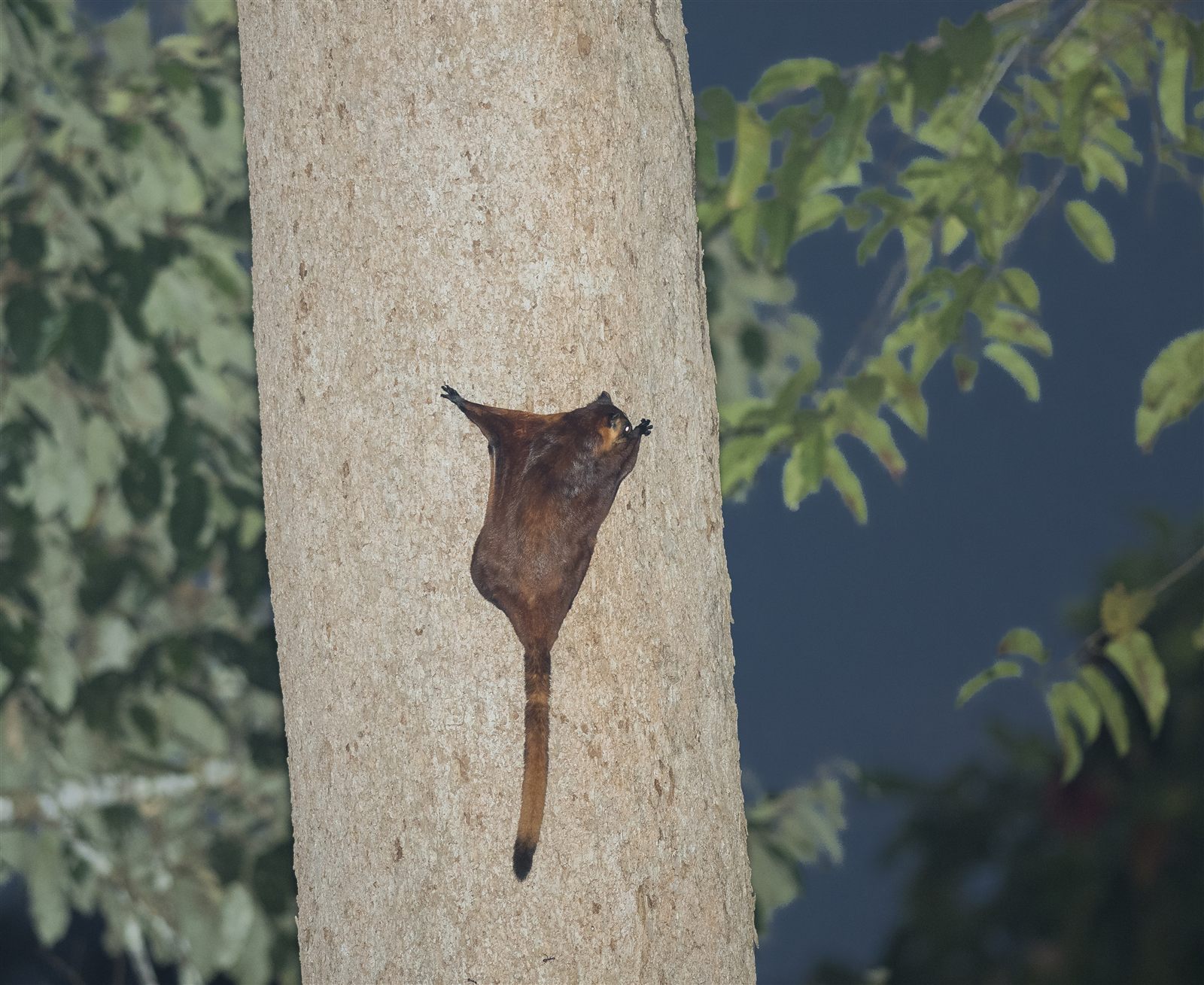
Red Giant Flying Squirrel
A large nocturnal squirrel in rich chestnut fur, with a loose skin membrane between its front and back legs that turns it into a glider. It launches from the canopy and glides a long way to another trunk. Common on the night drives, and usually found by the glow of its eyes in the spotlight.
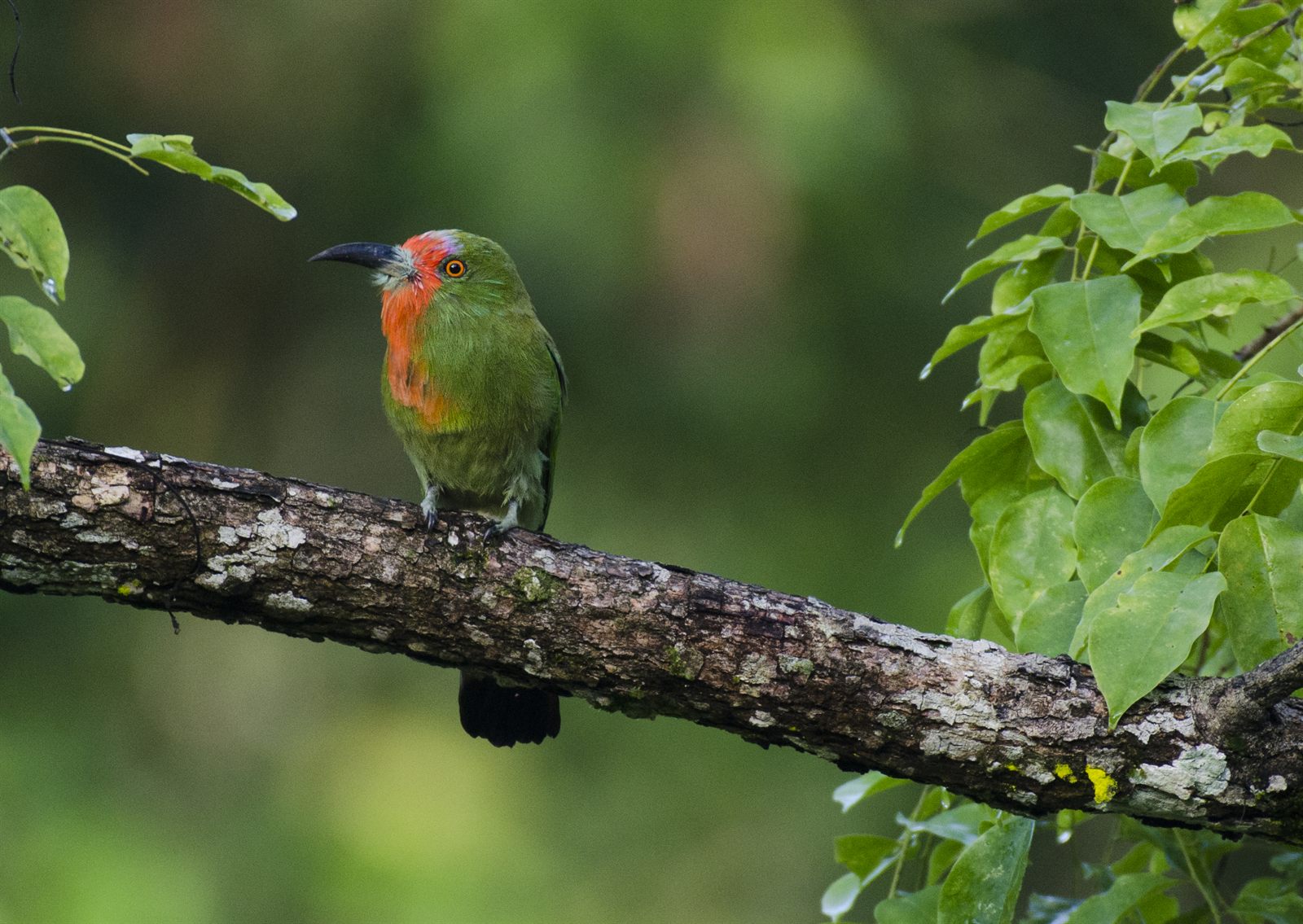
Red-bearded Bee-eater
A heavy-set, forest bee-eater, green-bodied with a shaggy crimson throat. Unlike the open-country bee-eaters it sits quietly, sallying out for large flying insects. At Deramakot it is seen around the accommodation most days, so you rarely need to go looking for it.
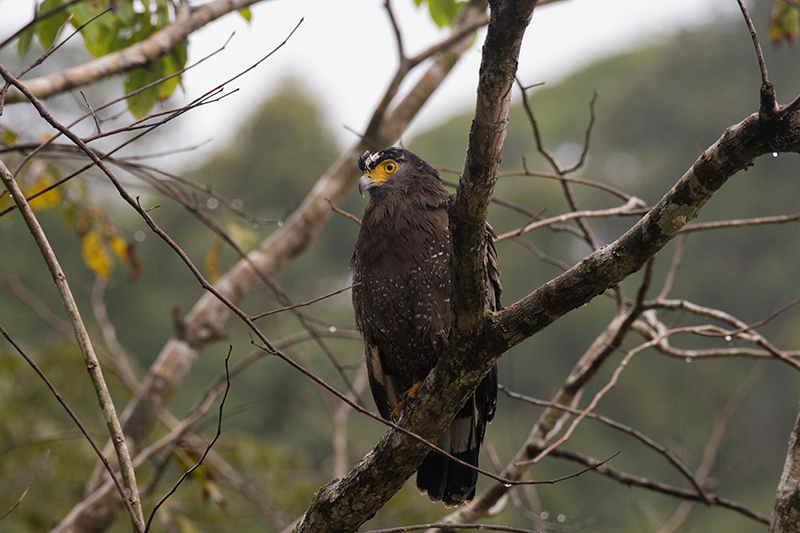
Crested Serpent Eagle
Deramakot's most conspicuous resident raptor, and there is nearly always one somewhere around the reception centre, perched on a branch or calling overhead with its far-carrying, ringing cry. A specialist hunter of snakes and other reptiles.
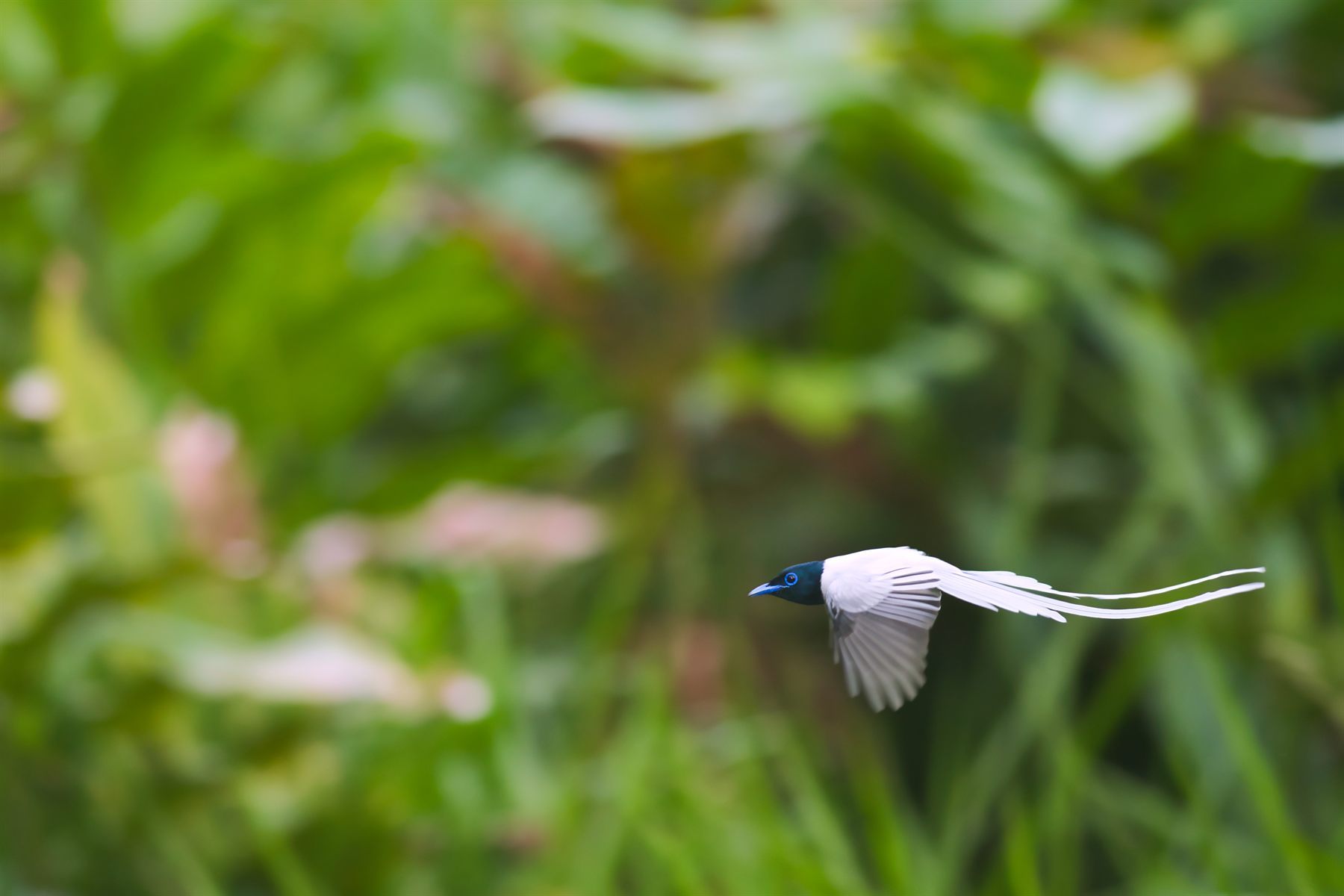
Blyth's Paradise-flycatcher
A striking flycatcher: adult males trail long white tail streamers and carry a glossy blue-black crest. It often poses well while you drive the roads, making it one of the easiest of the reserve's special birds to watch from the vehicle.
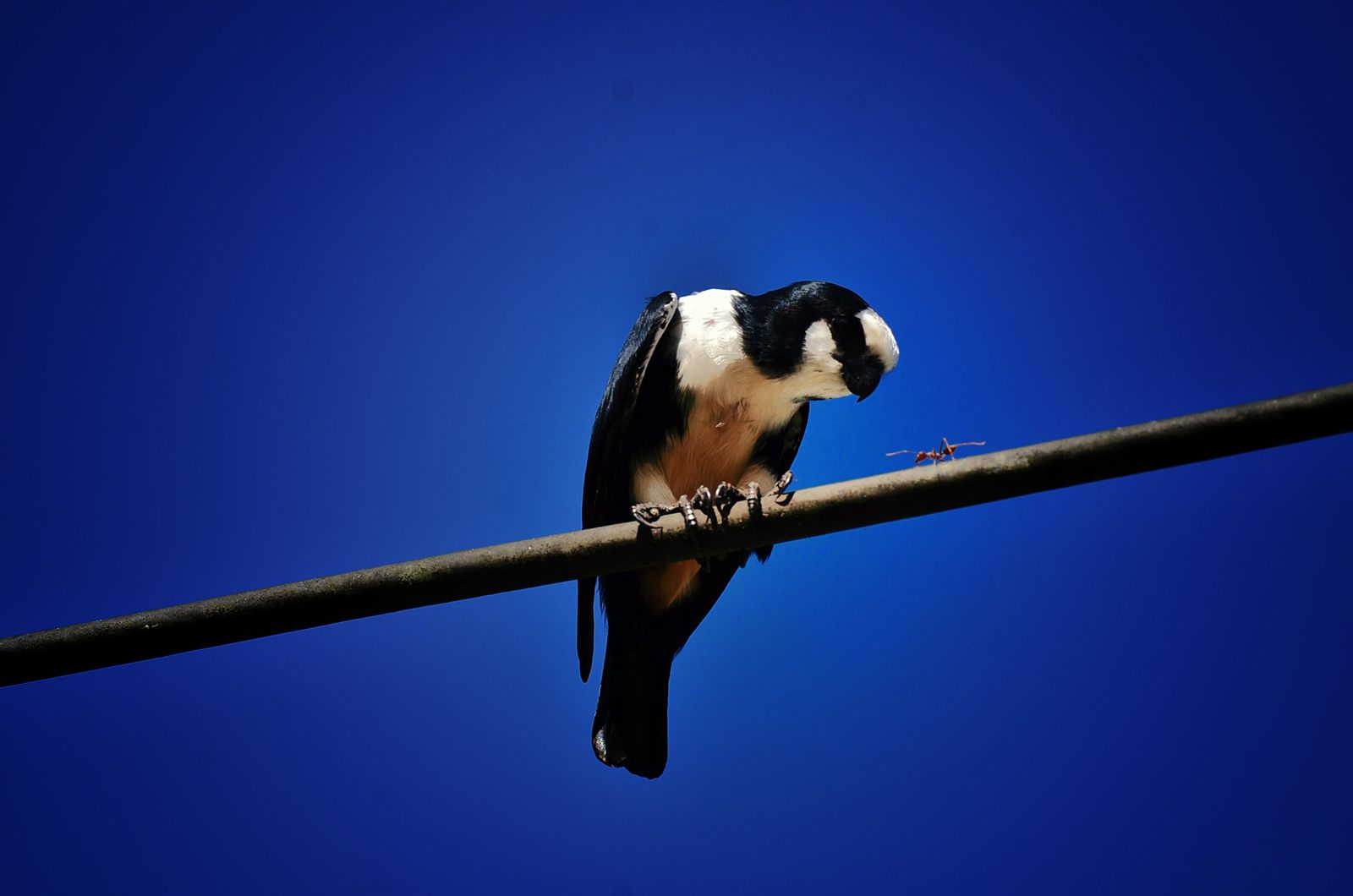
White-fronted Falconet
Found only in northern Borneo, and one of the smallest birds of prey in the world, black and white with a chestnut belly. It hunts large insects from an exposed perch, and this one is eyeing a weaver ant. Look for it on bare, open branches and wires, where its tiny size is easy to miss.
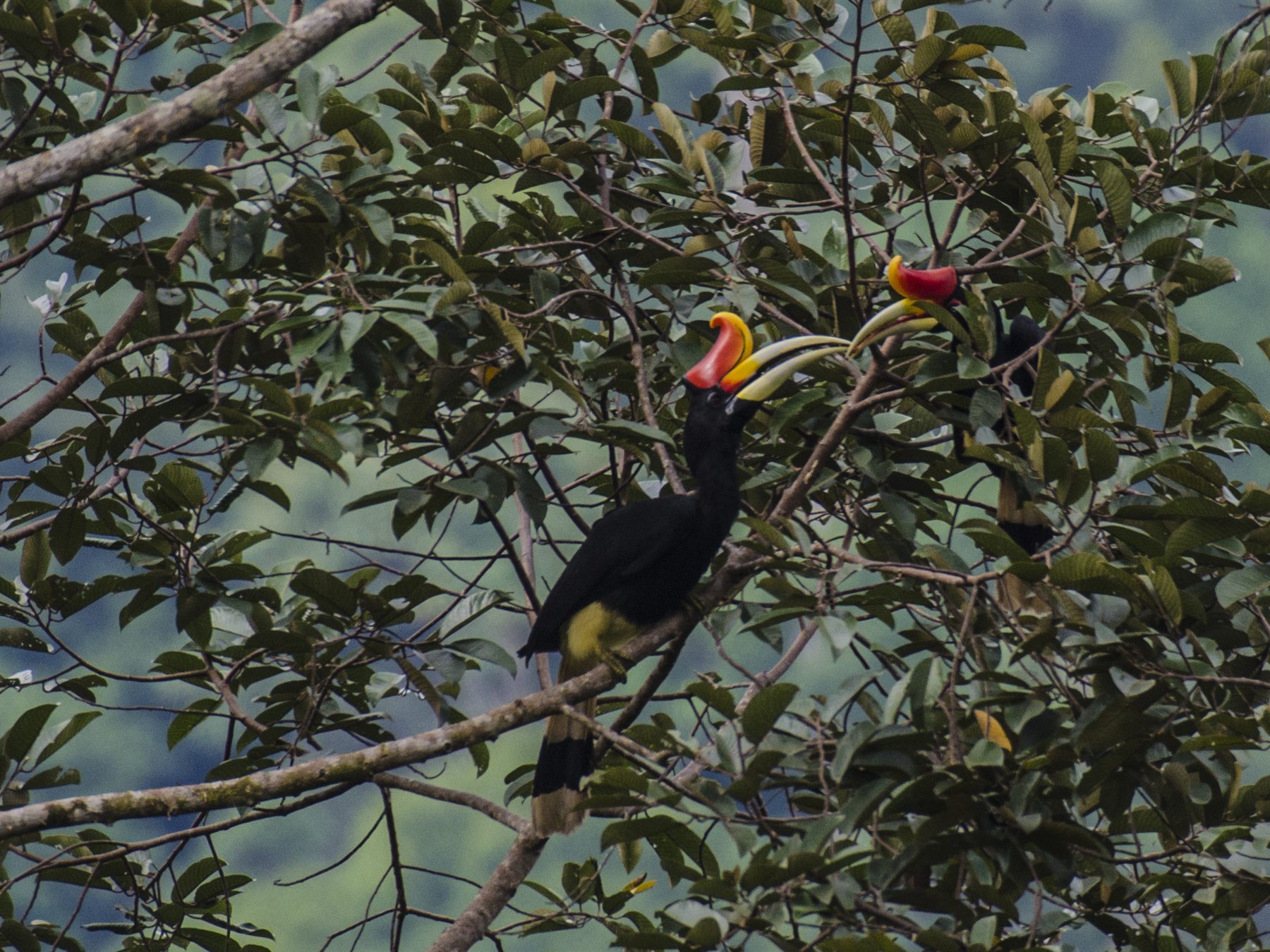
Rhinoceros Hornbill
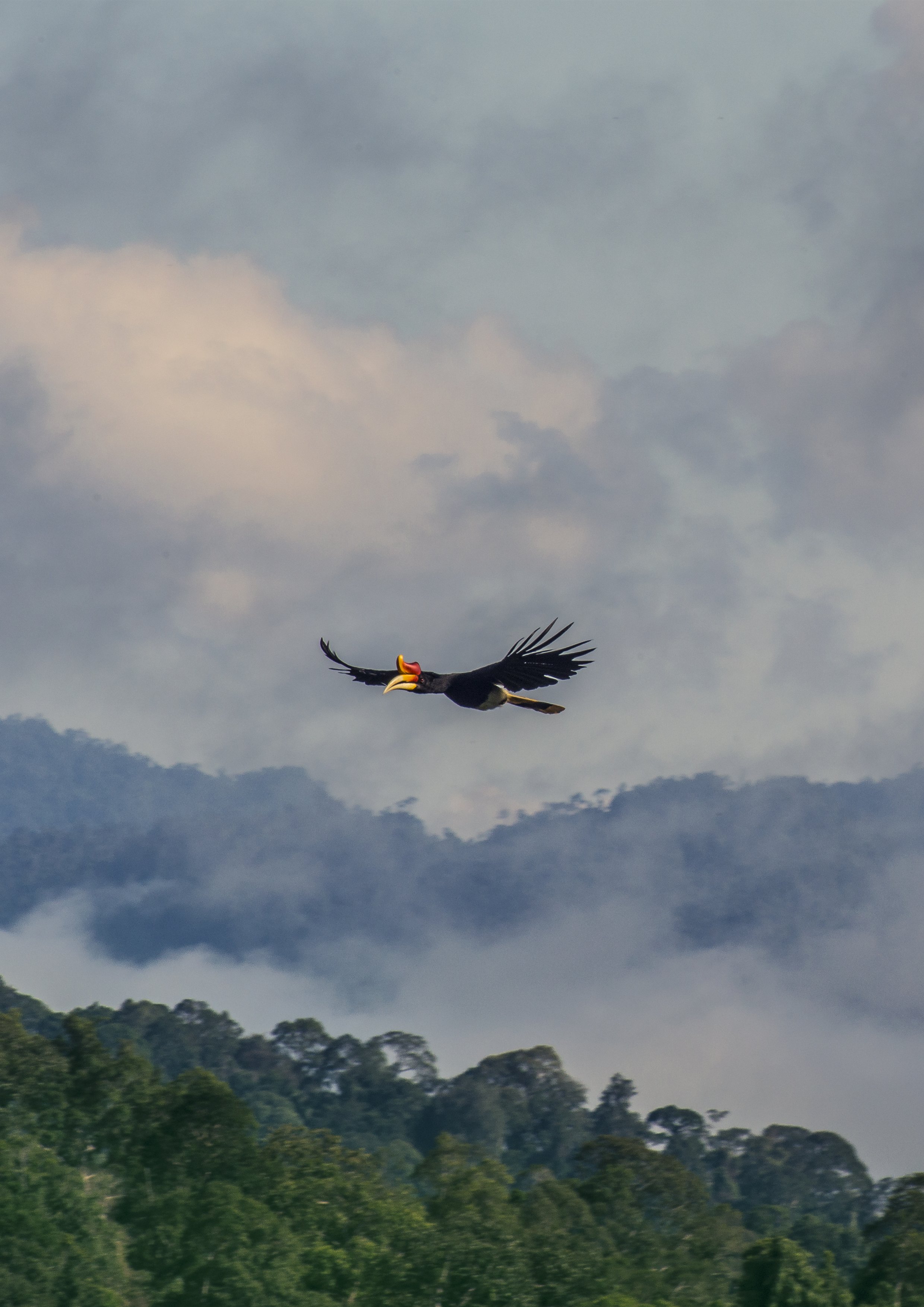
Borneo's best-known bird, with a huge upturned orange-and-red casque on top of its bill. Pairs cross the canopy with loud, whooshing wingbeats, and their honking calls carry a long way. It depends on big old trees: the female seals herself into a tree hole to nest, and the male feeds her through a narrow slit.
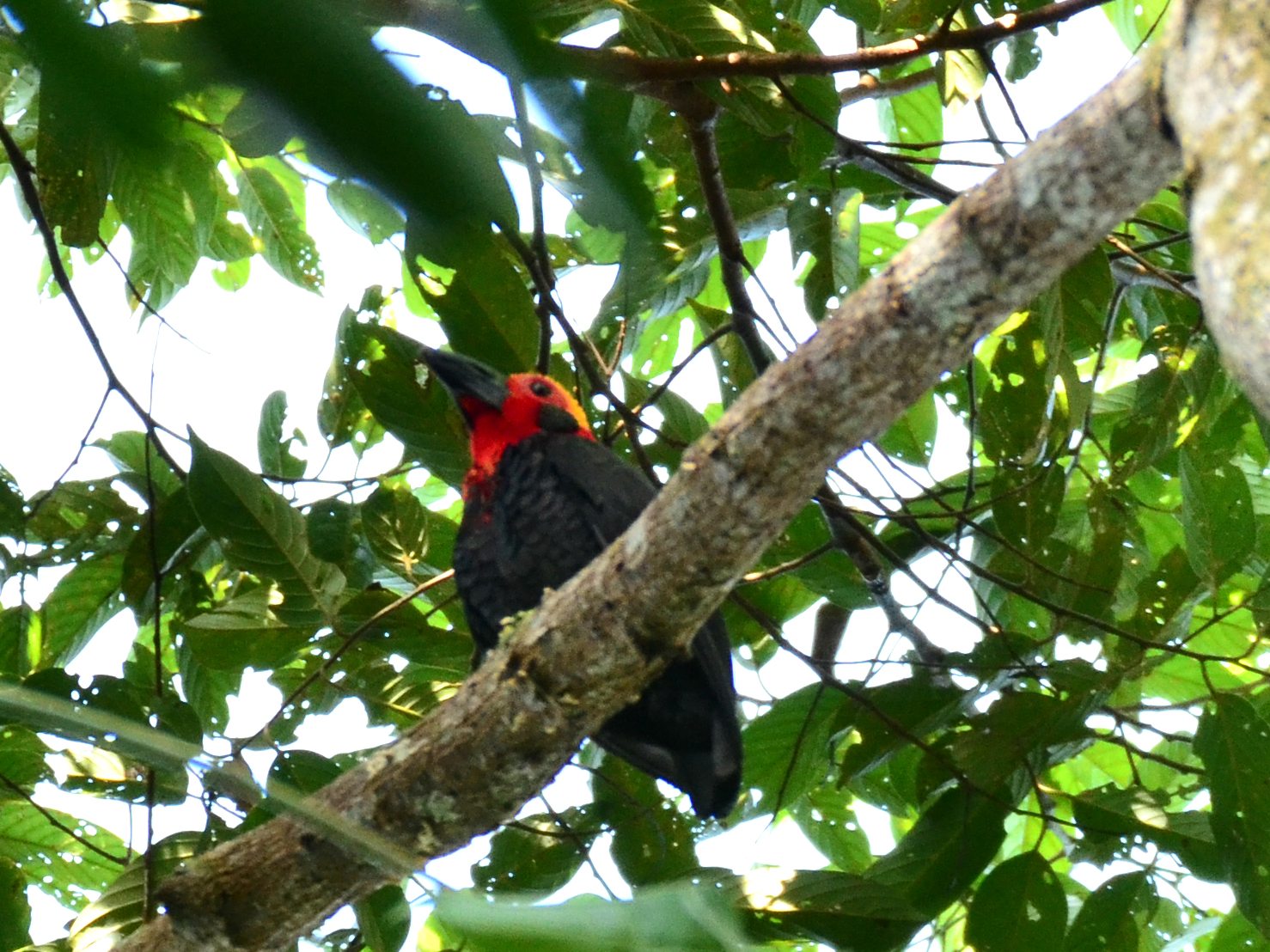
Bornean Bristlehead
Found nowhere but Borneo, and one of the birds visiting birders most want to see: a chunky black bird with a red head and a crown of short, bristly feathers. It moves through the canopy in small noisy groups, often with other species, and its calls are usually the first clue. Tall lowland forest like Deramakot's is the place to look.
 Jason Luke
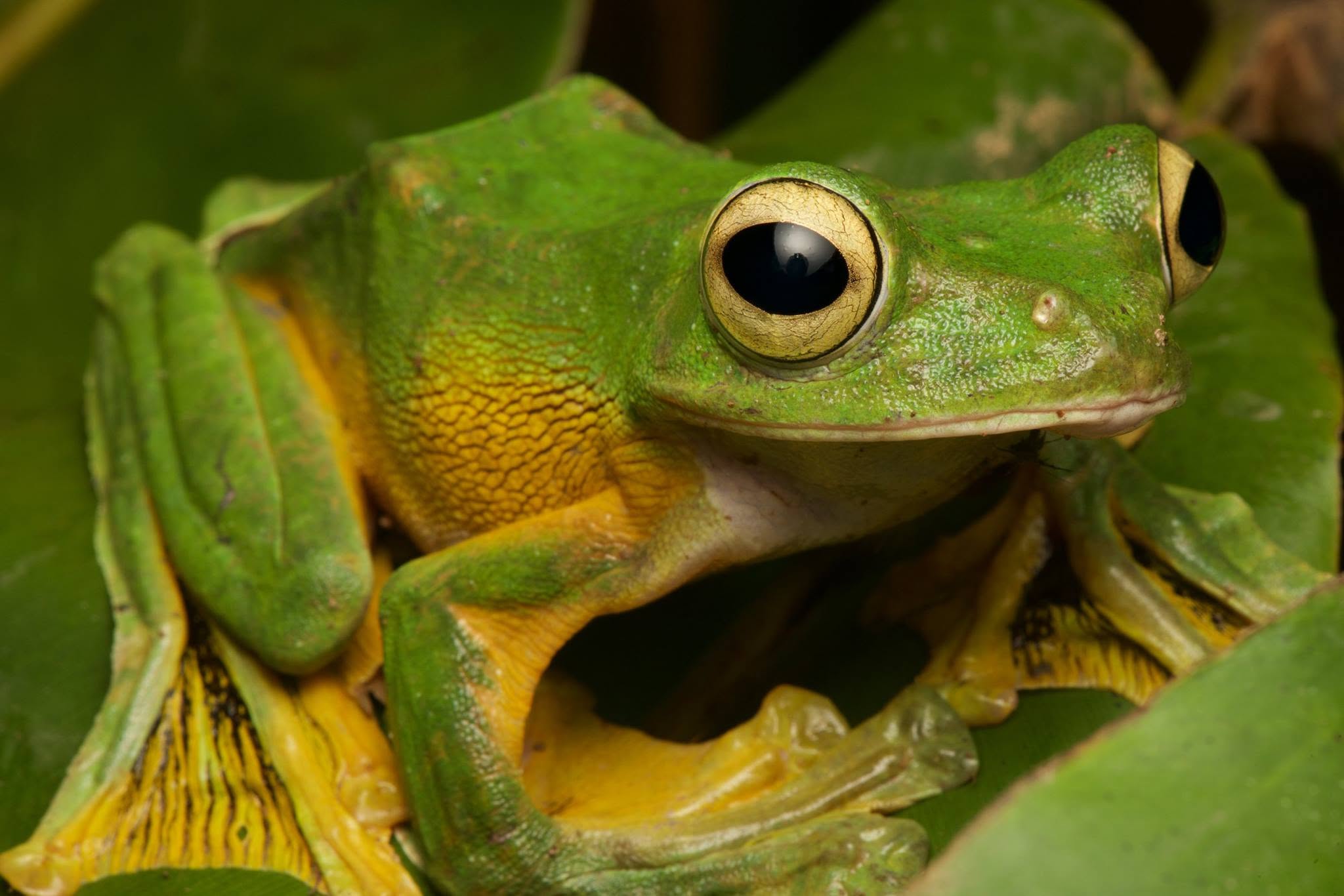
Wallace's Flying Frog
A large, bright green tree frog with dramatically enlarged, fully webbed feet that allow it to glide between trees. First documented by Alfred Russel Wallace during his own Bornean travels, it remains a favourite target for night walks, usually found on low vegetation near still water.
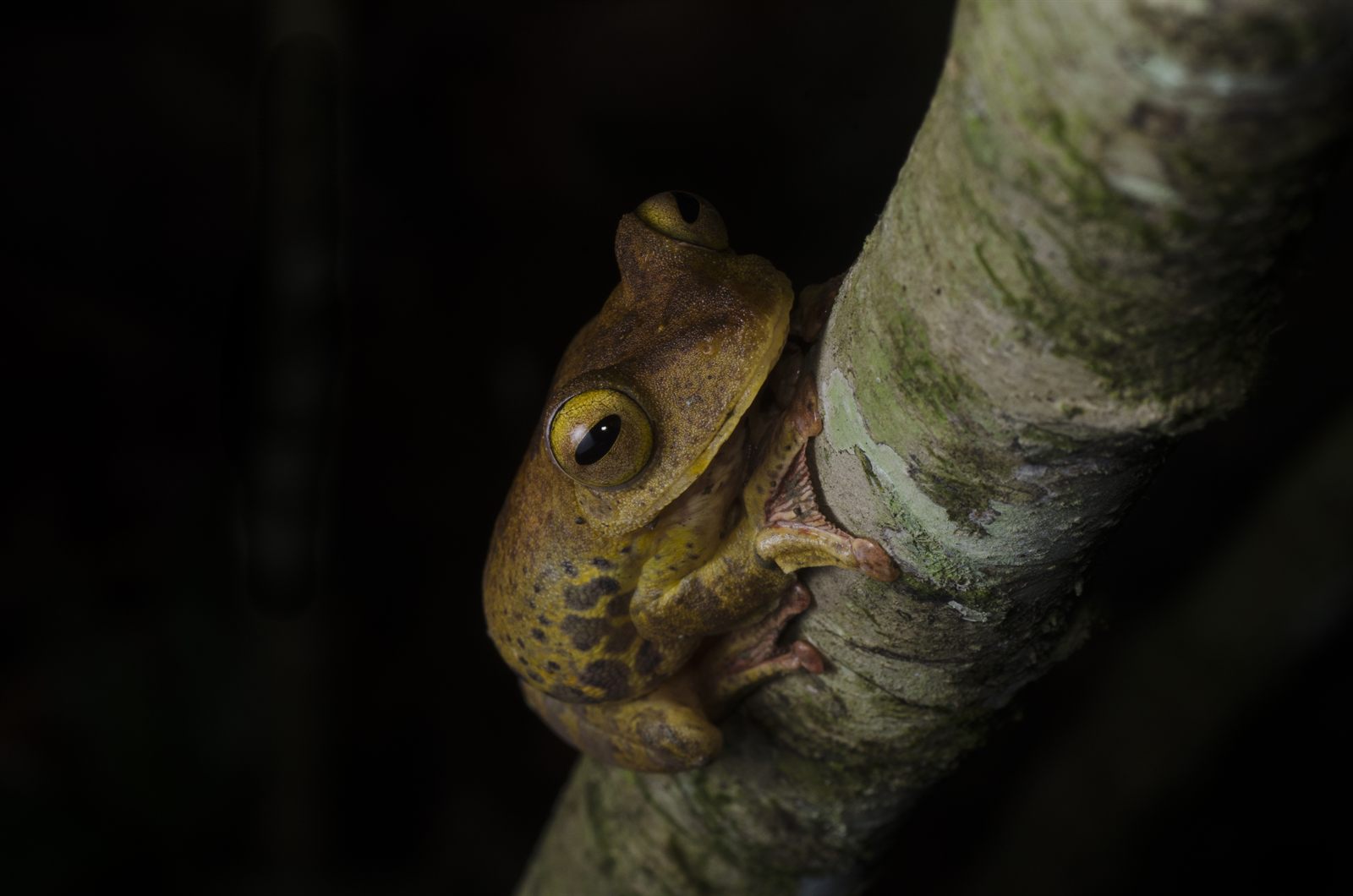
Harlequin Tree Frog
Another gliding frog, with big webbed feet and enormous eyes. Its colour ranges from greens to browns, with darker blotches along the flanks. Found at night on low branches and vegetation, usually not far from water.
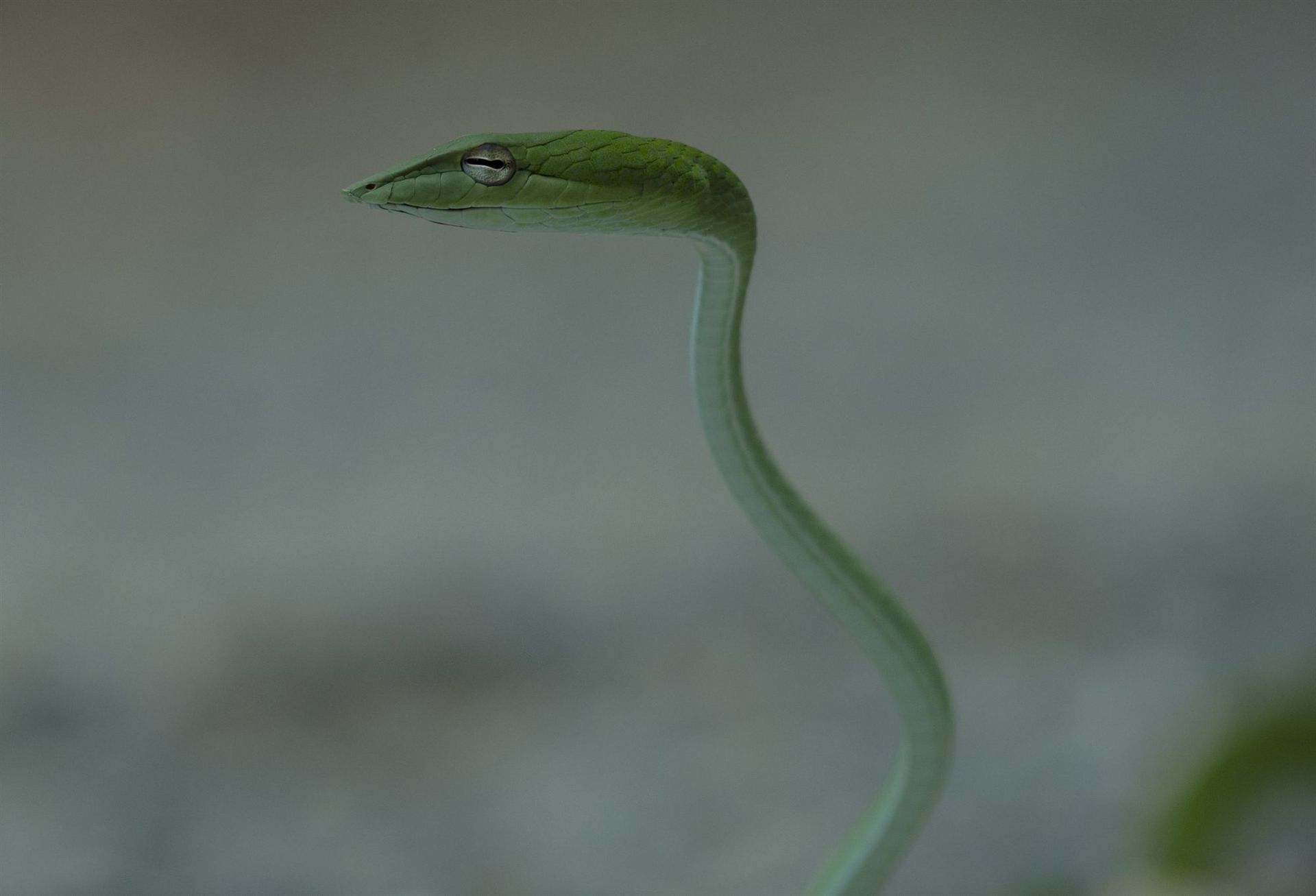
Green Vine Snake
Thin as a pencil and almost invisible among leaves and vines, with a long pointed snout and a keyhole-shaped pupil. It sways like a tendril in the breeze and takes lizards and frogs. Mildly venomous, but not dangerous to people.
 Jason Luke
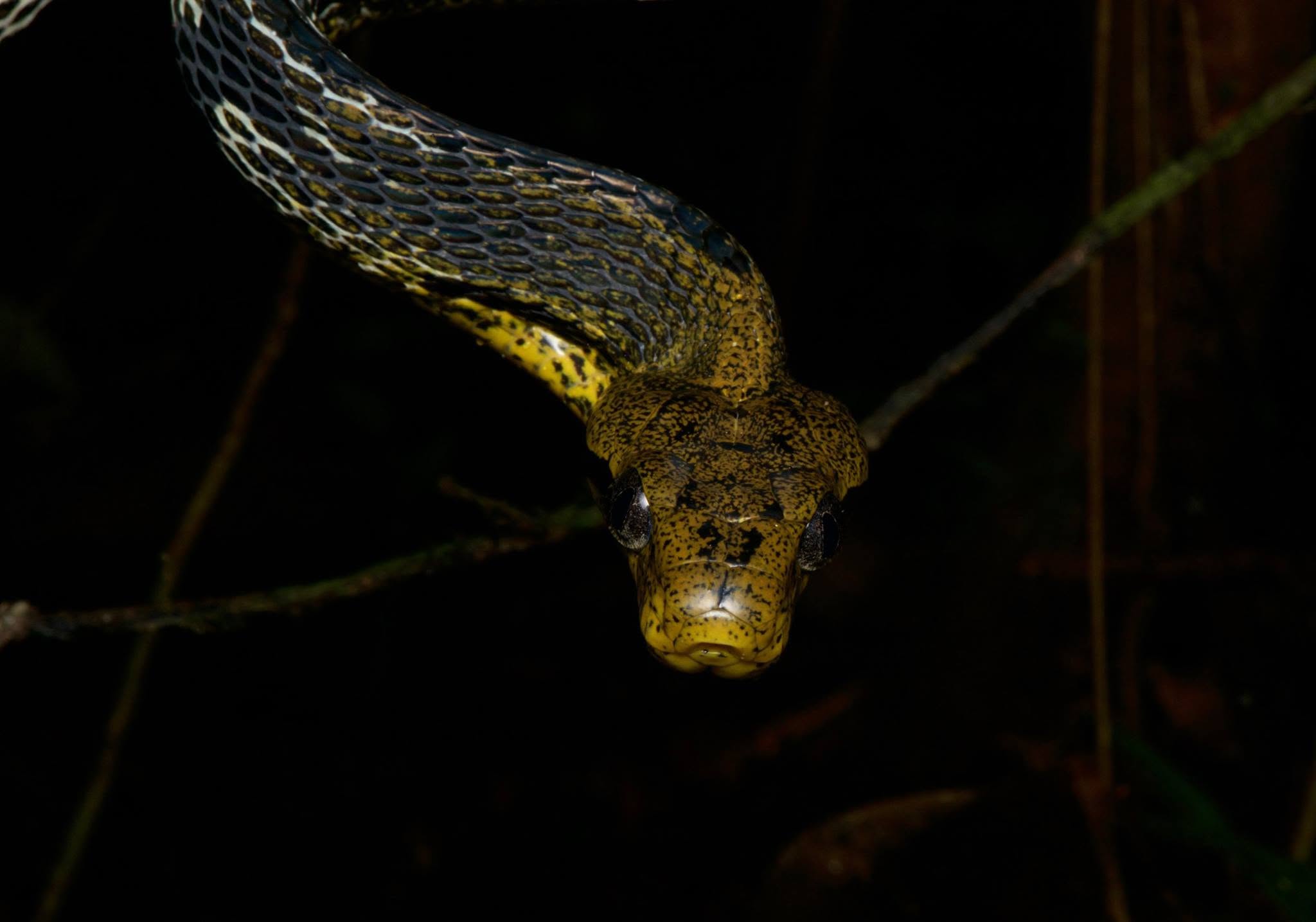
Dog-toothed Cat Snake
A slender, night-active tree snake with big eyes and enlarged front teeth. By day it sleeps coiled in foliage; after dark it hunts birds, lizards and small mammals. Mildly venomous, and seen on night drives where the road runs under overhanging trees.
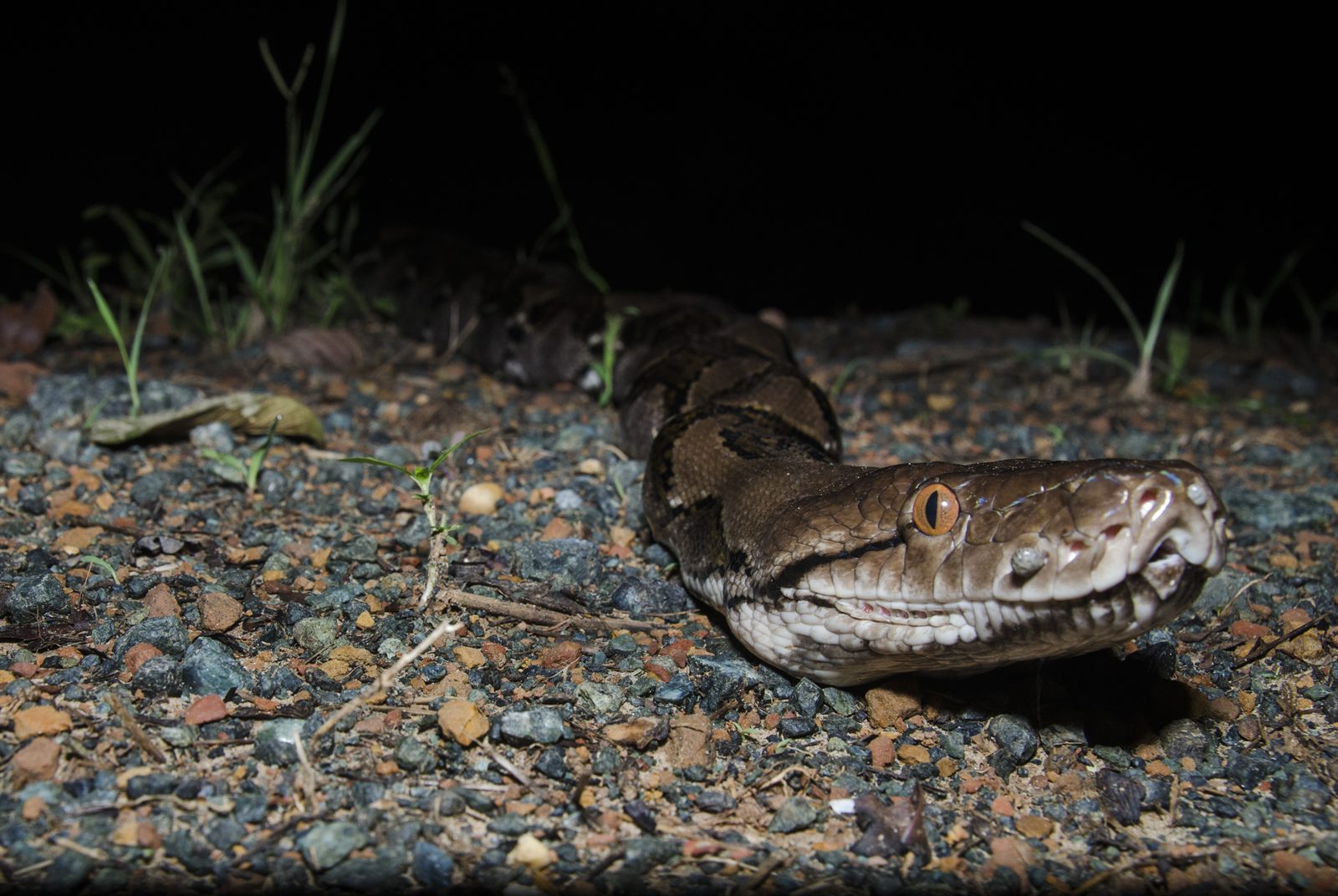
Reticulated Python
One of the longest snakes in the world, patterned with an intricate net-like camouflage that gives the species its name. Found both on the forest floor and along the road edge, and occasionally swimming across the reserve's waterways.
Getting There
Fly into Sandakan (SDK), then drive about two hours to the town of Telupid. Guests are met at Telupid at 2pm and taken into the reserve by 4WD, a further two to three hours. A private transfer from Sandakan can be arranged.
Accommodation
Guests stay at the forest headquarters in clean chalet-style rooms with air conditioning and hot water. A resident cook provides three meals a day, and dietary needs can be met with notice. Power is by generator, and wifi and phone signal are now available.
How Long to Stay
Two nights gives a first taste. Three to four nights gives a much better chance of the rarer species, and dedicated mammal watchers often stay a week.
Night Drives
Most visitors join an evening drive of two to four hours, spotlighting from an open vehicle. On specialist mammal-watching trips a night drive can run for seven to ten hours, through the small hours when several of the scarcer species are moving.
What to Bring
A head torch, binoculars, a light rain jacket, leech socks and a power bank for the occasional generator outage.
Night Drive Etiquette
- Keep voices low and movements slow once an animal is spotted.
- Leave the spotlight to your guide, and don't hold the beam on an animal longer than needed.
- Multi-night stays substantially improve the odds for the reserve's rarer species.
620 species of lowland Sabah, grouped by family. Tick what you see, on the page or on a printed copy. Most are found across Sabah's lowland forests, and not every species here has been recorded in Deramakot itself.
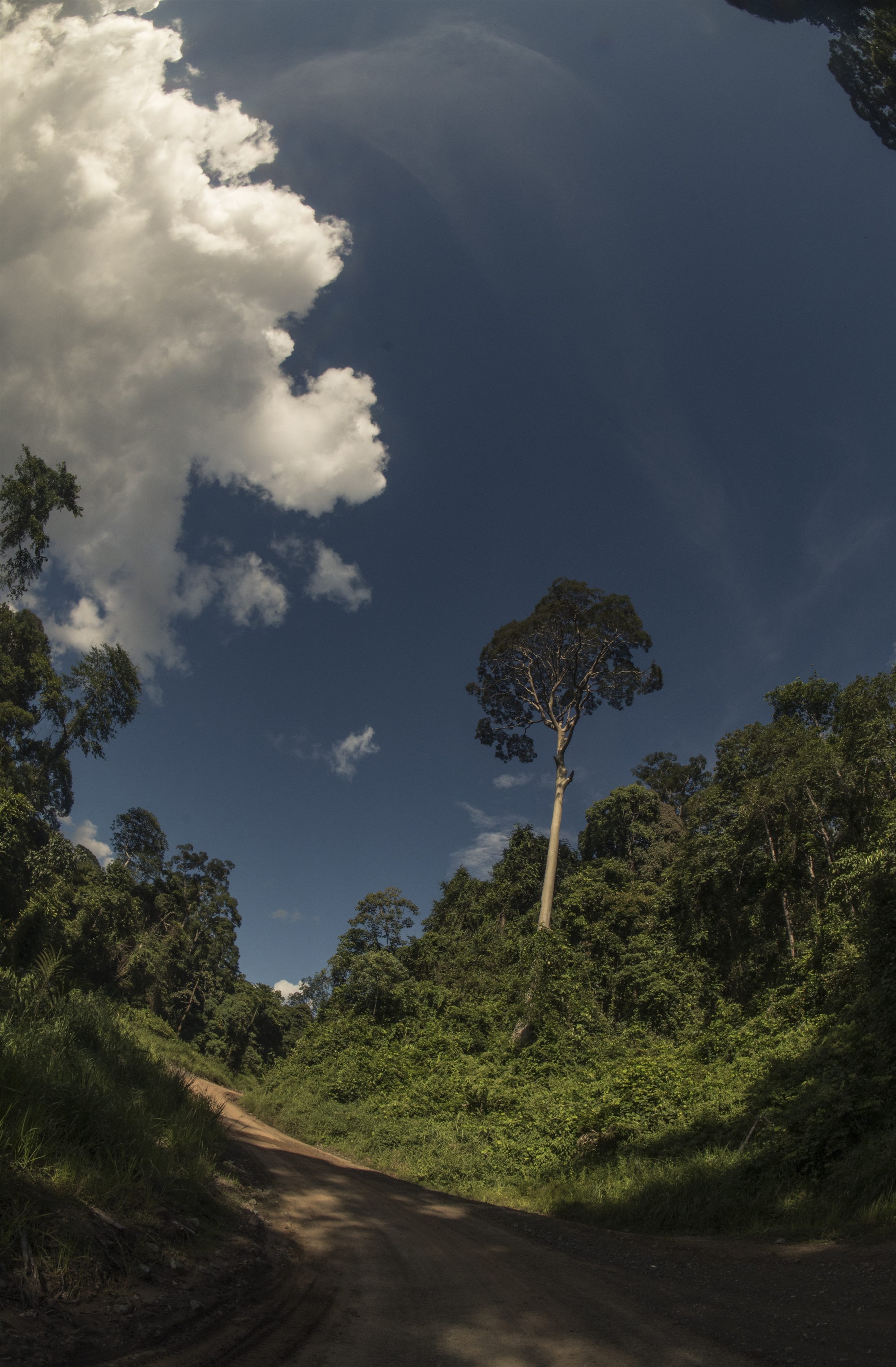
A working timber forest in the heart of Sabah, and one of the world's great places to watch wild mammals.
Adventure Alternative Borneo Sdn Bhd · Licensed tour operator KPL/LN 8442